How Dr. Aniamma Mathew Recovered from a Lumbar Disc Prolapse in 21 Days
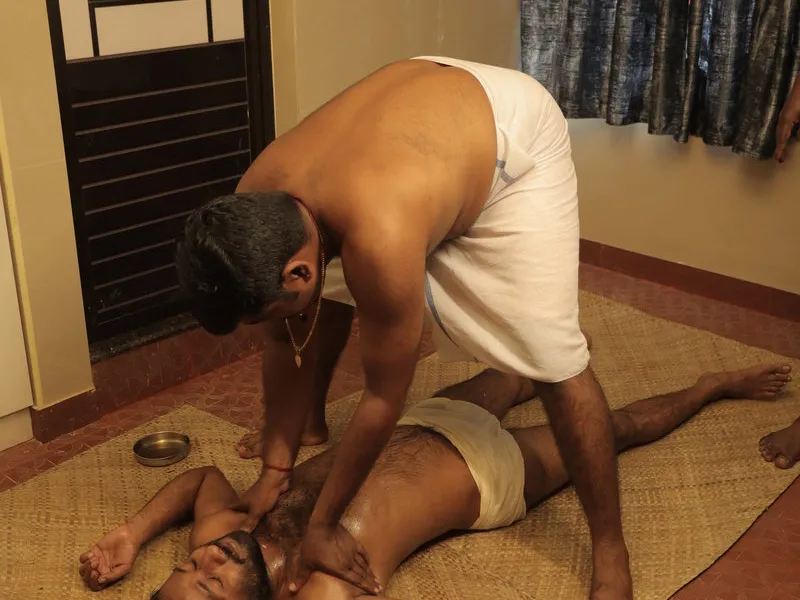
Table of Contents
A Doctor Becomes a Patient
When a physician walks into another doctor's hospital as a patient, they bring something extra into the room — a clinical eye, an instinct for what should be happening, and a low tolerance for being told things that don't add up. Dr. Aniamma Mathew arrived at Agasthya Ayurvedic Medical Centre about six years ago with exactly that kind of scrutiny, and with acute back pain following an inter-vertebral disc prolapse (IVDP).
By the time she left, after 21 days of in-patient treatment, the pain that had brought her in had been broken. Six months later, she was completely well — and has not had a recurrence since.
This is her recovery story, told in the clinical detail her case deserves, and reproduced from her own written words at the end. It is the first in our Patient Recovery Stories series — long-form case studies of real patients who chose Marma Chikitsa over surgery and returned to active life.
The Condition: Inter-Vertebral Disc Prolapse
An inter-vertebral disc prolapse — sometimes called a herniated, slipped, or ruptured disc — happens when the soft inner core of a spinal disc pushes out through a tear in its tougher outer ring. The displaced disc material then presses on a nerve root or on the spinal cord itself.
In the lumbar spine, where Dr. Aniamma's prolapse occurred, the typical presentation is exactly what she described: acute back pain, often radiating into the buttock or down one leg, with pain spikes on coughing, sneezing, bending, or sitting for any length of time. In severe cases the pain becomes constant — there is no comfortable position; sleep is broken; even short walks become impossible.
Most patients arriving at Agasthya with IVDP have already been through the conventional protocol:
- An MRI confirming the prolapse, with measurements of disc bulge or extrusion
- A neurosurgical or orthopaedic consultation
- A short course of NSAIDs, muscle relaxants, and gabapentin or pregabalin for nerve pain
- Bed rest and physiotherapy
- And, if the pain has not settled in 4–6 weeks, a recommendation for discectomy or microdiscectomy
It is at that last step that many patients pause — and start looking for an alternative.
What Conventional Treatment Offers (and Where It Falls Short)
Conventional management of IVDP is genuinely effective for many patients. A meaningful percentage of disc prolapses do reabsorb on their own with rest, anti-inflammatories, and time. Surgery, when it is the right call, can be life-changing for severe radiculopathy or progressive neurological deficit.
But there is a substantial middle group — patients whose pain is severe enough to disable them, but not severe enough that surgery is clearly indicated. They are advised: "Try painkillers and physio for six weeks. If it doesn't settle, we'll consider surgery." What this group is rarely told is that structured Ayurvedic in-patient care is a third option, designed precisely for this window — and that, for the right patient, it works.
This is the gap Marma Chikitsa fills. It is not a substitute for surgery in cauda equina, severe motor weakness, or progressive neurological loss — those are surgical emergencies, and our doctors will say so. But for the painful disc prolapse that is being managed pharmacologically while everyone waits to see if it settles, a 21-day in-patient course is often a faster, cleaner route back to normal life — and one that does not commit the spine to a permanent change.
The Agasthya Protocol — What 21 Days Actually Looks Like
Dr. Aniamma was admitted for 21 days. The protocol used in disc-prolapse cases follows the standard Marma Chikitsa framework refined by Dr. T.D. Bose over three decades, sequenced in three overlapping phases.
Phase 1 (Days 1–7): Reduce inflammation, break the pain cycle
The first week is about immediate relief. Treatments are gentler, focused on calming aggravated Vata in the lumbar region:
- Upanaham — a warm medicated herbal paste poultice bandaged over the affected lumbar segment, often kept on for hours (frequently overnight). Sustained, localised contact penetrates deep into the paraspinal musculature and around the affected disc level, reducing inflammation and muscle spasm.
- Dhanyamla Dhara — a continuous warm stream of fermented grain decoction over the back, used in inflammatory and Vata-aggravated presentations to settle acute pain and radiating symptoms.
- Marma Abhyangam — therapeutic oil application stimulating marma points along the spine, sacrum, and hip. Restores circulation and releases compensating muscles higher up the kinetic chain.
- Internal medicines — Vata-pacifying decoctions and ghee-based formulations to address the systemic component of the prolapse.
By the end of the first week, the pain spikes that brought the patient in are usually under control. Sleep returns. The patient begins to move with less guarding.
Phase 2 (Days 8–14): Mobilise and decompress
The middle week intensifies the protocol with the heavier, deeper therapies:
- Pizhichil — continuous warm oil stream over the body, with the lumbar region as the focal point. Profoundly relaxes paraspinal muscles and supports decompression of the disc level.
- Njavarakizhi — bolus massage with medicated rice that strengthens the deep stabilising muscles supporting the spine.
- Ela Kizhi — herbal-leaf bolus therapy for residual inflammation in the surrounding soft tissue.
This is the phase that does most of the structural work — improving the local environment around the disc so the body's own reabsorption processes can operate.
Phase 3 (Days 15–21): Consolidate and prepare for life after discharge
The final week is about locking in the gain. Treatments shift toward strengthening and stabilising — restoring tone in the deep core and lumbar musculature so that the patient leaves with a spine that is genuinely more resilient than the one they came in with. Discharge planning includes a tailored set of post-treatment do's and don'ts, internal medicines to continue at home, and graded activity advice for the months ahead.
The Recovery Curve
One of the most important — and most under-explained — aspects of Ayurvedic recovery is its shape. Conventional medicine is fast and binary: a steroid injection works in 48 hours or it doesn't; surgery either resolves the radiculopathy on the operating table or it doesn't.
Marma Chikitsa is different. As Dr. Aniamma herself observed:
"Recovery was slow unlike other medical treatment, but I was completely alright by about 6 months."
That sentence is the most honest summary of an Ayurvedic IVDP recovery you will read. The acute pain breaks during the in-patient stay. But the full return to normal — the disappearance of every twinge, the confidence to lift, sit cross-legged, drive long distances, climb stairs without thinking about it — unfolds over the following three to six months as the disc and surrounding tissues continue to heal.
This is not a weakness of the treatment. It is the natural timeline of a tissue healing without being cut. Patients who understand this curve, and respect the post-treatment protocol, do extraordinarily well. Patients who expect a 21-day cure to be a one-and-done are often disappointed in week 3 — and then surprised in month 4.
In Her Own Words
Dr. Aniamma submitted her testimonial six years after her treatment — long enough to know whether the recovery had held. It had. Reproduced verbatim:
"I was treated at Agasthya Ayurvedic center for acute back pain following Inter Vertebral Disc Prolapse about 6 years back. I was admitted for 21 days and was given various Ayurvedic treatment procedures. Recovery was slow unlike other medical treatment but I was completely alright by about 6 months. I never had to look back after that. Thanks to Dr. Bose and team for their excellent, dedicated work. I would not hesitate to recommend this center for others with this kind of medical problem at any time."
"I never had to look back" is the line that matters most. A successful Ayurvedic treatment for IVDP is not measured at discharge. It is measured years later, in the absence of recurrence — in the patient who simply went on with their life.
What This Means for You
If you are reading this with an MRI report on your phone and a surgical recommendation in your inbox, here is the practical takeaway:
- A 21-day in-patient Ayurvedic course is a legitimate, well-defined treatment option for most painful lumbar disc prolapses where surgery is being weighed but is not yet urgent.
- Recovery is slow by design. Plan for three to six months of progressive return to normal — not for a discharge-day cure.
- Costs are a fraction of surgery. Spinal surgery in a private hospital in India typically runs ₹2–6 lakh; a full in-patient Ayurvedic course at Agasthya is well below that, with no operative risk.
- You don't have to decide today. Send your MRI on WhatsApp. Our doctors will give you an honest read on whether your case is a good Marma Chikitsa candidate or whether surgery is genuinely the right call.
For a fuller picture of what to expect during an in-patient stay, see our guide to ayurvedic treatment for disc bulge in Kerala — what to expect, or the deeper question of whether Ayurveda can cure disc bulge without surgery.
Frequently Asked Questions
Was Dr. Aniamma's prolapse fully reabsorbed, or did she just become pain-free?
We do not have a follow-up MRI to confirm reabsorption — most patients, once well, do not get repeat imaging unless symptoms recur. What we know is that her pain resolved, function returned, and she has remained well for six years and counting. Clinically, that is the outcome that matters.
Why does Ayurvedic recovery take six months?
Because the body is healing the disc and surrounding tissue rather than removing the prolapsed fragment. Soft-tissue healing follows its own biological timeline; the in-patient course creates the conditions for that healing, and time does the rest.
How does the cost compare to surgery?
A 21-day in-patient Marma Chikitsa course at Agasthya is a fraction of the cost of a discectomy at a private Indian hospital — and a small fraction of the cost in the UK, US, or Gulf. For a detailed breakdown, see our article on ayurvedic treatment cost in Kerala.
Who shouldn't try this protocol?
Patients with cauda equina syndrome, progressive motor weakness, loss of bowel/bladder control, or severe and worsening neurological deficit should be evaluated surgically without delay. Our doctors screen for these on consultation and will refer accordingly.
What does the post-treatment phase look like?
Internal medicines continue for several weeks. Patients are advised on graded activity, lumbar-spine-friendly posture, sleeping positions, and what to avoid (heavy lifting, prolonged sitting without breaks, jolting travel). Most patients return to desk work within 4–6 weeks of discharge and to full activity within 3–6 months.
Talk to Our Doctors
The fastest way to find out whether your case is suitable is to send your MRI on WhatsApp.
- WhatsApp your MRI: +91 93884 77762
- Call: +91 93884 77762
- Online consultation: Book here — patients consult from UAE, Canada, Europe, and across India before travelling
You can also read our deep-dive on the best disc bulge treatment in Kerala, explore Dr. T.D. Bose's lineage and Marma Chikitsa training, or browse more recovered-patient stories.
Medically reviewed by Dr. T.D. Bose, Chief Physician, Agasthya Ayurvedic Medical Centre. Patient testimonial reproduced verbatim with permission. First in the Patient Recovery Stories case-study series.
Related Treatment
Learn more about this treatment at Agasthya
Written by
Dr. T.D. BoseChief Physician at Agasthya Ayurvedic Medical Centre with 30+ years of experience in Marma Chikitsa and traditional Ayurvedic treatments.
Have questions about this treatment?
Share your reports on WhatsApp for a personalized consultation.