Nasyam — Ayurvedic Nasal Therapy
Nasyam — Panchakarma Nasal Therapy for the Head, Neck & Sinuses
One of the five classical Panchakarma procedures — the most direct route to treat conditions above the shoulder girdle.
At Agasthya, Nasyam is a cornerstone of our protocols for cervical spondylosis, chronic sinusitis, migraine and frozen shoulder. Medicated oils are administered through the nostrils to purify all srotas (channels) of the head and neck. Because the nasal route reaches the cervical region, para-nasal sinuses and the brain via the olfactory pathway, Nasyam can address conditions that surface treatments simply cannot reach. Prescribed for 7–14 day protocols by Dr. T.D. Bose, often alongside Marma Chikitsa and Marma Abhyangam.
What Is Nasyam?
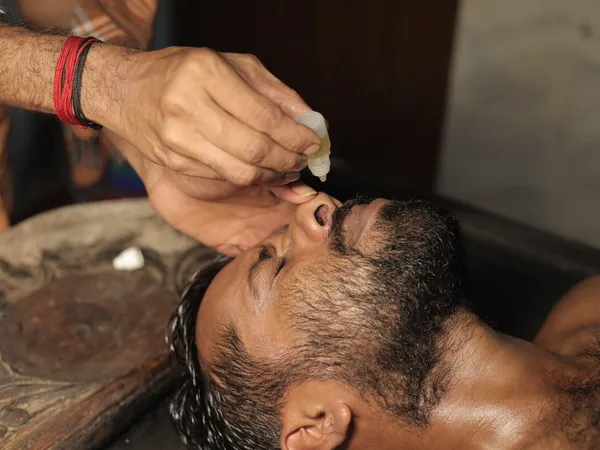
Nasyam (also called Nasya Karma) is one of the five classical Panchakarma procedures described in the Charaka Samhita. The Sanskrit word Nasya means “through the nose”. The procedure involves the controlled administration of medicated oils, herbal preparations or powders through the nostrils to cleanse and treat the head, neck, sinuses, throat and brain — collectively called Urdhwajatrugata vikara, or disorders above the clavicle.
The therapeutic logic is simple but powerful: in Ayurveda, the nose is the gateway to the head. The nasal mucosa is richly supplied with blood vessels and nerve endings (the olfactory pathway), making it one of the fastest absorption surfaces in the body. Medicated oils administered through this route reach the para-nasal sinuses, cervical region, and brain tissues directly — bypassing the digestive system. This is why Nasyam can effectively treat cervical disc problems, chronic sinusitis, migraines and facial nerve conditions where oral medicines and topical applications often fall short.
The Nasyam Procedure — Step by Step
At Agasthya, Nasyam is performed by trained therapists under the supervision of our doctors. Each session lasts 30–45 minutes and follows the classical three-phase Panchakarma structure: Purva Karma (preparation), Pradhana Karma (main procedure), and Pashchat Karma (post-procedure care).
Step 1 — Purva Karma (Preparation)
The treatment begins with a 15-minute warm oil massage (Mukha Abhyangam and Greeva Abhyangam) over the face, scalp, neck, shoulders, and upper chest. This opens up the channels (srotas) and prepares the cervical region and head to receive the medicated nasal preparations.
Step 2 — Swedam (Localised Steam)
Mild steam fomentation is applied to the face and forehead using medicated herbal water. This loosens accumulated Kapha (mucus, phlegm) in the sinuses and softens the channels of the head — a critical preparation for the medicated oil to penetrate deeply.
Step 3 — Pradhana Karma (Nasal Administration)
The patient lies in a slightly reclined position with the head tilted back. Warm medicated oil — selected based on the patient's prakriti and condition (commonly Anu Tailam, Shadbindu Tailam, or Ksheerabala Tailam) — is instilled drop by drop into each nostril. The dosage typically ranges from 6 to 10 drops per nostril, depending on the protocol.
Step 4 — Marsha Period (Absorption)
The patient is asked to inhale gently and hold the head in position for several minutes. This allows the medicine to travel through the nasal mucosa to the para-nasal sinuses and through the olfactory pathway to deeper tissues of the head, neck, and brain.
Step 5 — Pashchat Karma (Post-procedure care)
Two follow-up procedures deepen the cleansing effect: Dhoomapanam (inhalation of therapeutic medicated smoke) helps expel residual Kapha from the upper respiratory tract, and Kabalam (medicated gargling with warm decoction) clears the throat and oral cavity. Light foods and warm water are recommended for the rest of the day.
Key Benefits of Nasyam
Because Nasyam works directly on the head, sinuses, cervical spine and central nervous system, it produces benefits that are difficult to achieve through any other Ayurvedic route.
Conditions Nasyam Treats
Classical Ayurveda lists Nasyam as the primary treatment for all Urdhwajatrugata vikara — disorders above the shoulder girdle. At Agasthya, we use Nasyam most often for the following conditions, almost always alongside Marma Chikitsa and supporting internal medicines.
Cervical Spondylosis
Nasyam delivers medicated oil along the cranio-cervical pathway to reduce inflammation around compressed nerves at C4-C7. Particularly effective when neck pain radiates to shoulders and arms.
Learn more →Chronic Sinusitis & Allergic Rhinitis
Long-standing sinus blockage, recurrent cold, post-nasal drip, and seasonal allergies. Nasyam clears the para-nasal sinuses at the root rather than only suppressing symptoms.
Migraine & Tension Headaches
Reduces frequency and intensity of migraine attacks by clearing accumulated Kapha-Vata in the sinuses and calming the nervous system through the olfactory pathway.
Frozen Shoulder
Pairs with Marma Abhyangam in our protocol to release adhesive capsulitis. Nasyam works on the cervical-shoulder energy pathway to restore range of motion.
Facial Palsy (Bell's Palsy)
One of the classical indications of Nasyam in Ayurveda. Medicated oils delivered through the nasal route nourish facial nerves and aid recovery from sudden-onset facial paralysis.
Brachial Neuralgia
Nerve pain radiating from neck through shoulder and down the arm — typically caused by cervical disc compression. Nasyam reduces nerve inflammation directly through the cranial pathway.
Hair Fall, Premature Greying & Scalp Disorders
Nasyam nourishes the scalp via the cranial circulation, supporting hair follicle health when combined with Shiro-Abhyangam and internal Ayurvedic medicines.
Learn more →Memory & Concentration Issues
By strengthening the indriyas (sense faculties) and clearing channels above the shoulder girdle, Nasyam supports mental clarity, focus, and memory — useful for stress-related cognitive fatigue.
Treatment Duration & What to Expect
Nasyam is rarely prescribed in isolation. At Agasthya, it is part of a broader 7–14 day in-patient programme that combines nasal therapy with Marma Abhyangam, internal Ayurvedic medicines, and dietary guidance tailored to your condition.
7-Day Programme
Suitable for acute or recently developed conditions:
- • Seasonal sinusitis or allergic rhinitis
- • Mild cervical stiffness
- • Stress-related headaches
- • Recent-onset frozen shoulder
14-Day Programme
Recommended for chronic and long-standing conditions:
- • Chronic cervical spondylosis (C4-C7)
- • Long-standing migraine and chronic headache
- • Chronic sinusitis with recurrent infections
- • Bell's palsy and brachial neuralgia
After Treatment — Continuing Care at Home
After completing the in-patient course, recovery continues with prescribed internal medicines, Anu Tailam (a few drops in each nostril, recommended daily), neck exercises, and posture corrections. Patients with cervical spondylosis or migraine are usually advised follow-up consultations at 3 and 6 months. Most patients report sustained relief if the post-treatment routine is followed for 8–12 weeks.
Patient Outcomes — Real Stories from Agasthya
Nasyam is one of the most prescribed Panchakarma procedures at Agasthya for cervical and sinus conditions. These patients underwent treatment programmes that included Nasyam alongside Marma Chikitsa.
Shyamala Raveendran
“I had been diagnosed with cervical spondylitis along with severe neck pain going down from my shoulder all the way to fingers. I took 21 days treatment at Agasthya. My pain and swelling has totally reduced and I am feeling very good. They have a good team and good facility. I will surely recommend my friends and relatives.”
"I did 21 days of treatment while staying there. It was a really amazing and rejuvenating experience. My wife also got 10 days of treatment for her cervical spondylitis and leg pain — Dr. Sreeja diagno..." Read more
Why Receive Nasyam at Agasthya?
Nasyam is a clinical Panchakarma procedure — not a wellness add-on. The choice of medicated oil, the dosage, the temperature of the preparation, the patient's posture, and the timing of follow-up procedures all materially affect the outcome. Done correctly, Nasyam can resolve conditions where other treatments stall. Done casually, it has limited or no effect.
At Agasthya, every Nasyam protocol is prescribed personally by Dr. T.D. Bose after evaluating your prakriti, MRI/X-ray reports, and current symptoms. The therapy team has been working with Dr. Bose since 1998, and our pharmacy prepares fresh medicated oils in-house. As an NABH-certified Ayurvedic hospital, we follow standardised protocols and maintain detailed clinical records for every patient.
For chronic cervical spondylosis, sinusitis, migraine and frozen shoulder, Nasyam is most effective when integrated into a complete protocol with Marma Chikitsa, Marma Abhyangam, and internal Ayurvedic medicines — which is exactly how it is delivered here.
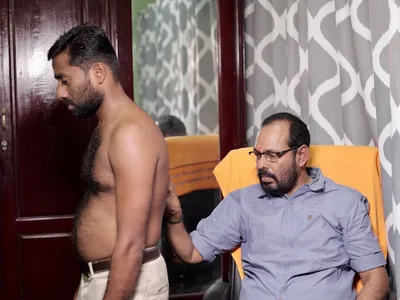
Dr. T.D. Bose — Chief Physician & Panchakarma Specialist
Frequently Asked Questions about Nasyam
What conditions does Nasyam treat?
How is Nasyam treatment performed?
Is Nasyam treatment painful?
How many days of Nasyam treatment are needed?
Can Nasyam help with cervical spondylosis specifically?
How is Nasyam different from a standard nasal spray or sinus medication?
Can I have Nasyam if I have high blood pressure or diabetes?
What does the day after Nasyam feel like?
Related Treatments & Conditions
Considering Nasyam? Speak to our Doctors First.
Whether you're dealing with chronic cervical pain, recurring sinusitis, migraine, or a frozen shoulder — the right Nasyam protocol depends on your prakriti, your reports, and the underlying condition. A short consultation with Dr. Bose will tell you exactly what's needed, in person or online.
Call us: +91 93884 77762
Online consultations available — we treat patients from UAE, Canada, Belgium and across India
Medically reviewed by Dr. T.D. Bose, Chief Physician, Agasthya Ayurvedic Hospital. Last updated: April 26, 2026.