Ayurvedic Treatment for Cervical Spondylosis
Struggling with chronic neck pain that won't go away?
Cervical spondylosis affects millions of people, yet most treatments only mask the pain without addressing its source. At Kerala's NABH-certified Agasthya Ayurvedic Medical Centre, our specialized approach combines Marma Chikitsa with Nasyam therapy to treat cervical conditions at the root. Over 30+ years, we have helped thousands of patients from India and abroad find lasting relief from neck pain, cervical disc problems, and radiating arm pain without surgery.
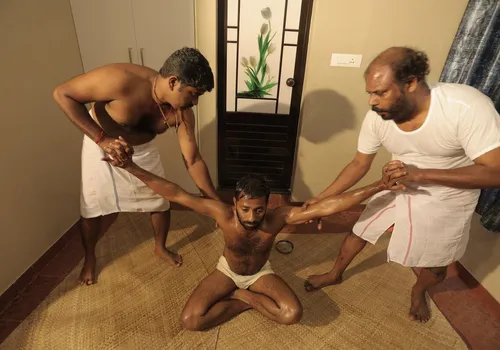
Understanding Cervical Spondylosis — The Ayurvedic Perspective
In Ayurveda, cervical spondylosis is understood as Greeva Stambha, a condition caused by the vitiation of Vata dosha in the cervical region. Vata governs all movement and nerve function in the body. When Vata becomes aggravated or obstructed in the neck region, it leads to pain, stiffness, nerve compression, and progressive degeneration of the cervical vertebrae and discs.
The cervical spine consists of seven vertebrae (C1-C7) that support the head and allow a wide range of neck movement. Between each vertebra sits a disc that acts as a cushion. With age, poor posture, and repetitive stress, these discs lose moisture and height, the vertebral joints develop bony spurs (osteophytes), and the spinal canal may narrow. Ayurveda views this degeneration as a result of Vata-driven tissue depletion (Dhatu Kshaya) compounded by the accumulation of metabolic toxins (Ama) in the joints and tissues.
Common Symptoms
Neck Pain & Stiffness
Persistent pain and tightness in the neck, often worse in the morning or after prolonged sitting. The stiffness may limit your ability to turn or tilt your head fully. Many patients describe a grinding or crunching sensation (crepitus) during neck movement.
Radiating Pain to Arms
When cervical disc bulges or bone spurs compress the nerve roots, pain radiates from the neck through the shoulder and down the arm. This is called cervical radiculopathy. The pain may be sharp, burning, or electric in nature, and specific arm movements or neck positions can trigger or worsen it.
Headaches & Dizziness
Cervicogenic headaches originating from the upper cervical spine are common. These typically start at the back of the head and radiate forward. Some patients also experience dizziness or a sensation of imbalance due to compromised blood flow through the vertebral arteries or nerve irritation in the upper neck.
Numbness & Tingling
Nerve compression in the cervical spine can cause numbness, tingling, or a pins-and-needles sensation in the shoulders, arms, and fingers. In advanced cases, patients may notice weakness in their grip or difficulty with fine motor tasks like buttoning a shirt.
Why Cervical Problems Are Increasing
The rise in cervical spondylosis among younger adults is directly linked to modern habits. Hours spent looking down at smartphones ("text neck"), working at improperly set up computer stations, and sedentary lifestyles weaken the neck muscles and accelerate disc degeneration. Stress and poor sleep further aggravate Vata, intensifying pain and muscle tension.
At Agasthya Ayurvedic Medical Centre, we address both the structural damage and the lifestyle factors that contribute to cervical spondylosis. Our treatment protocol is designed to relieve nerve compression, reduce inflammation, strengthen the cervical musculature, and guide you toward habits that protect your neck long-term.
When Neck Symptoms Need Urgent Medical Attention
Most cervical spondylosis is a slow, manageable degenerative condition — but certain symptoms can signal cervical myelopathy (compression of the spinal cord itself), which needs prompt medical evaluation before any Ayurvedic or conservative treatment begins. Seek a specialist's assessment without delay if you notice:
- ⚠ Progressive weakness or clumsiness in the hands — dropping objects, or difficulty buttoning a shirt, writing, or holding a cup
- ⚠ An unsteady, wide-based walk or a loss of balance, especially in the dark or on stairs
- ⚠ Numbness, tingling or weakness spreading into both arms, or down into the legs
- ⚠ An electric-shock sensation running down the spine or into the limbs when you bend your neck forward
- ⚠ Any loss of bladder or bowel control (a late, serious warning sign)
- ⚠ Sudden, severe neck pain following a fall, accident, or direct injury
These signs do not mean surgery is inevitable — many patients with early myelopathy still respond well to careful conservative care — but they must be evaluated first. If any apply to you, share your MRI report with us on WhatsApp and we will advise whether inpatient treatment is appropriate or whether you need urgent specialist referral first.
How Cervical Spondylosis Is Diagnosed
An accurate diagnosis is the starting point for effective treatment. At Agasthya, diagnosis combines a hands-on clinical examination with a review of your imaging — so the protocol is matched to your actual pathology, not just your symptoms.
Clinical Examination
The physician assesses neck range of motion, checks for tenderness and muscle spasm, tests the reflexes, grip strength and sensation in the arms and hands, and observes your gait and balance. A nerve-tension test (turning and gently loading the neck to reproduce arm pain) helps identify which nerve root is compressed.
Imaging
An X-ray shows bony changes — disc-space narrowing, bone spurs (osteophytes) and spinal alignment. An MRI is the most detailed study: it reveals disc bulges and herniations, the degree of nerve-root or spinal-cord compression, canal narrowing, and any early cord changes. Nerve conduction studies (NCS/EMG) are occasionally added when nerve involvement needs confirming.
Understanding Your MRI / X-ray Report
Cervical reports are dense with jargon that can be alarming to read. Here is what the common terms actually mean:
Loss of cervical lordosis / straightening
The normal inward curve of the neck has flattened, usually from chronic muscle spasm and posture. Common and often reversible with treatment.
Disc bulge / protrusion / herniation
The cushioning disc has spread beyond its normal margin (bulge), pushed out further (protrusion), or torn and leaked (herniation), most often at C5-C6 and C6-C7.
Osteophytes / disc-osteophyte complex
Bony spurs that grow as the spine ages. When combined with a bulging disc they can press on nerves or the spinal cord.
Neural foraminal stenosis
Narrowing of the small openings where nerve roots exit the spine — the usual cause of pain, numbness or tingling radiating into the arm (radiculopathy).
Canal stenosis / thecal sac indentation
Narrowing of the central canal that houses the spinal cord. Mild indentation is common; significant cord compression needs closer evaluation.
Cord signal change / myelomalacia
A bright signal within the spinal cord suggesting the cord itself is affected (myelopathy). This finding warrants prompt specialist assessment.
Confused by your cervical MRI report? Send it to us and Dr. Bose's team will explain exactly what it means for your treatment — free of charge.
Get My Report ReviewedConditions We Treat
Our cervical treatment protocols address a range of neck and upper spine conditions. Many patients come to us after being advised cervical spine surgery and find relief through our non-surgical approach. For the pinched-nerve, arm-radiation form specifically, see our dedicated guide to cervical radiculopathy treatment.
Cervical Spondylosis
Age-related degeneration of the cervical vertebrae and discs, leading to chronic neck pain, stiffness, and restricted movement.
Cervical Disc Bulge (C4-C7)
Herniated or protruding discs in the cervical spine, most commonly at C5-C6 and C6-C7 levels, causing nerve compression and radiating arm pain.
Cervical Radiculopathy
Pinched nerve in the neck causing sharp pain, numbness, or weakness radiating from the neck through the shoulder and down the arm.
Cervical Myelopathy
Compression of the spinal cord in the neck region causing difficulty with balance, coordination, and fine motor skills in the hands.
Neck Muscle Spasms
Chronic muscle tightness and spasms in the neck and upper back, often triggered by poor posture, stress, or underlying cervical degeneration.
Cervical Spondylitis
Inflammatory changes in the cervical spine causing persistent pain, morning stiffness, and progressive reduction in neck mobility.
Our Treatment Approach — Marma Chikitsa + Nasyam
For cervical conditions, our treatment combines two powerful approaches. Marma Chikitsa, the ancient science of vital energy points, is used to release blocked energy along the cervical spine, reduce nerve compression, and restore proper alignment. Our chief physician, Dr. T.D. Bose, trained under the legendary Marmacharya Shri Sudheer Vaidhyar, has refined this approach over three decades.
What makes our cervical treatment protocol distinctive is the addition of Nasyam (nasal administration of medicated oils). Ayurveda considers the nose the gateway to the head and neck. Nasyam delivers therapeutic compounds directly to the cervical region, reducing inflammation in the upper spine, clearing blocked channels, and addressing the headaches and dizziness that often accompany cervical spondylosis.
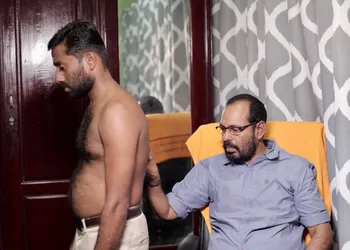
Dr. T.D. Bose during consultation
The Treatment Protocol
1. Assessment
Thorough evaluation including Prakriti (constitution) analysis, cervical range of motion testing, neurological examination, and review of MRI/X-ray reports to identify the affected levels.
2. Customized Plan
A personalized treatment plan combining Marma Chikitsa, Nasyam, and supporting therapies tailored to your specific cervical condition and severity.
3. Daily Treatment
Morning therapy sessions with cervical Marma treatment, Nasyam, supporting therapies, internal medicines, and guided neck exercises.
Supporting Therapies for Cervical Conditions
Marma Chikitsa and Nasyam are enhanced with specialized Ayurvedic therapies that work together to reduce cervical pain, heal compressed nerves, and restore neck function:
Marma Abhyangam — Therapeutic massage stimulating marma points in the neck, shoulders, and upper back to release tension and reduce nerve inflammation.
Nasyam — Nasal administration of medicated oils that deliver therapeutic compounds directly to the head and neck region. Particularly effective for cervical spondylosis, cervicogenic headaches, and upper spine inflammation.
Upanaham — A warm medicated herbal paste poultice is bandaged over the cervical region, often kept on for hours. Sustained, localised contact penetrates deep into the paraspinal muscles around the cervical vertebrae and discs, reducing stiffness and nourishing the surrounding tissues.
Pizhichil — Continuous stream of warm medicated oil poured over the body, deeply nourishing for the nerves and muscles of the neck and upper back.
Shirodhara — Steady stream of warm oil poured on the forehead, calming the nervous system and relieving stress-related muscle tension in the neck and shoulders.
Njavara Kizhi — Medicated rice bolus massage that nourishes the cervical muscles, strengthens supporting tissues, and promotes nerve regeneration.
Key Differentiators of Our Approach
Treatment Duration
We offer structured treatment programs based on the severity of your cervical condition:
What the Research Shows
A clinical observation published in AYU — the peer-reviewed journal of Ayurveda (2010;31(2):218–222) — followed 22 patients with Greeva Stambha (cervical spondylosis), aged 18 to 70, treated with a conservative Ayurvedic protocol. Using a visual analog scale, the study documented measurable reductions in neck pain, headache, numbness, tingling and weakness after treatment, with symptoms moving consistently from higher to lower severity grades.
This mirrors what we see in practice at Agasthya: for the large majority of cervical spondylosis presentations — where the spinal cord is not significantly compromised — a structured conservative approach relieves symptoms and restores function without surgery. Read the study: Clinical observation on Greeva Stambha Chikitsa (PMC).
Diet, Lifestyle & Movement for Cervical Spondylosis
Because cervical spondylosis is a Vata-driven degenerative condition, everyday diet and posture strongly influence how you feel. These measures support your treatment and help protect the neck long-term — but they complement, not replace, a physician's assessment.
Helpful — Do
- ✓ Eat warm, freshly cooked, easily digestible meals; add anti-inflammatory spices like ginger, turmeric, cumin and pepper
- ✓ Include healthy fats such as ghee and sesame oil, which pacify Vata and nourish the joints
- ✓ Stay well hydrated with warm water through the day
- ✓ Keep the screen at eye level, take a movement break every 30–45 minutes, and use a supportive pillow that keeps the neck neutral
- ✓ Apply gentle warmth to a stiff neck and keep a regular sleep routine to calm Vata
Aggravating — Avoid
- ✗ Cold, dry, raw or heavily processed foods and excess caffeine, which aggravate Vata
- ✗ Long unbroken hours bent over a phone or laptop ("text neck")
- ✗ Sleeping on a thick, stacked or very firm pillow, or on your stomach with the neck turned
- ✗ Sudden jerky neck movements, heavy lifting, and carrying heavy bags on one shoulder
- ✗ Aggressive self-manipulation or forceful "neck cracking" — especially risky when nerves are already compressed
A Note on Neck Exercises
Gentle range-of-motion and isometric neck-strengthening exercises can genuinely help — but only once a physician has confirmed there is no significant cord or nerve-root compromise, and only at the right intensity for your case. The wrong exercise at the wrong stage can worsen a compressed nerve. That is why, during your treatment at Agasthya, our team teaches you a safe, individualised set of movements and progresses them as you recover — rather than a generic routine copied from the internet.
Have questions about your cervical condition? Get expert advice now.
Why Choose Agasthya for Cervical Spondylosis Treatment
What to Expect — Your Treatment Journey
From your first contact to returning home with a healthy neck, here's what you can expect when you choose Agasthya for your cervical spondylosis treatment:
Step 1: Initial Consultation
Contact us by phone, WhatsApp, or through our contact page. You can have an initial consultation in-person or online. Bring your cervical MRI/X-ray reports if available.
Step 2: Diagnosis & Assessment
Comprehensive evaluation including Prakriti analysis, cervical range of motion testing, neurological assessment, and review of your imaging reports to identify affected disc levels.
Step 3: Customized Treatment Plan
Based on your assessment, the doctor creates a personalized protocol combining Marma Chikitsa, Nasyam, and supporting therapies with specific duration and goals.
Step 4: Daily Treatment Sessions
Morning therapy sessions including cervical Marma treatment, Nasyam, Upanaham, and other prescribed therapies. Internal medicines and guided neck exercises between sessions.
Step 5: Ergonomic & Lifestyle Guidance
Education on proper posture for desk work, correct pillow usage, neck-strengthening exercises, and lifestyle modifications to prevent recurrence of cervical problems.
Step 6: Follow-up Care
Take-home medicines and detailed instructions for home management. Follow-up consultations available in-person or online to monitor your progress.
Related Articles
The vital-point therapy at the heart of our cervical protocol — how Marma Chikitsa relieves nerve compression and chronic neck and spine pain.
Shirodhara is often combined with cervical treatments to address neck pain, tension headaches, and stress-related symptoms.
Nasyam delivers medicated oils to the cervical and cranial channels — a core part of our cervical spondylosis protocol alongside Marma therapy.
Related Conditions
Cervical problems often coexist with lower back conditions. Learn more about our back pain treatment:
Ayurvedic Back Pain Treatment →Many cervical patients also have disc bulges. Learn about our specialized disc treatment:
Disc Bulge Treatment Without Surgery →Cervical nerve compression can cause sciatica-like symptoms. Learn about our sciatica treatment:
Sciatica Treatment Without Surgery →Joint pain and arthritis often accompany cervical spondylosis. Learn about our knee treatment:
Knee Pain & Arthritis Treatment →A stiff, painful shoulder rather than neck pain may be a frozen shoulder. Learn about our treatment:
Frozen Shoulder (Apabahuka) Treatment →Patient Success Stories
Read what patients with cervical and spine conditions have to say about their experience at Agasthya:
"I have been diagnosed with cervical spondylitis along with severe neck pain going down from my shoulder all the way to fingers. I took 21 days treatment at Agasthya. My pain and swelling has totally r..." Read more
"We came here multiple times for treatment, for my mother's shoulder pain. Now she is relieved by the treatment they gave her. Excellent service, experienced and friendly doctors, nice staff and a frie..." Read more
Watch: Patients Share Their Recovery Stories
Kausalya, Kannur
Anil Kumar, Malappuram
Frequently Asked Questions
How long does Ayurvedic treatment for cervical spondylosis take?
Can Ayurveda reverse cervical disc degeneration?
What is Nasyam and how does it help cervical problems?
Is cervical spondylosis curable or only manageable?
Can I work at a computer after treatment?
What precautions should I follow after treatment?
What is the best Ayurvedic treatment for cervical spondylosis in Kerala?
Does cervical spondylosis cause headaches, dizziness, or hand numbness?
Can cervical spondylosis cause paralysis or permanent damage?
Which pillow and sleeping position is best for cervical spondylosis?
Start Your Recovery Today
Don't let cervical spondylosis limit your life. Whether you're dealing with chronic neck pain, radiating arm pain, or cervical disc problems, our team is ready to help you find lasting relief through authentic Ayurvedic treatment.
Call us: +91 93884 77762
Online consultations available — Get expert advice from anywhere in the world
Medically reviewed by Dr. T.D. Bose, Chief Physician, Agasthya Ayurvedic Hospital. Last updated: July 12, 2026.