Ayurvedic Treatment for Knee Pain & Arthritis
Were you advised knee replacement surgery?
Many patients told they need a knee replacement have found lasting relief at Agasthya instead. At Kerala's NABH-certified Agasthya Ayurvedic Medical Centre, our non-surgical approach using Marma Chikitsa, Upanaham and Kulathakizhi has helped patients from across India and abroad avoid surgery, reduce pain, and restore mobility in their knee joints.
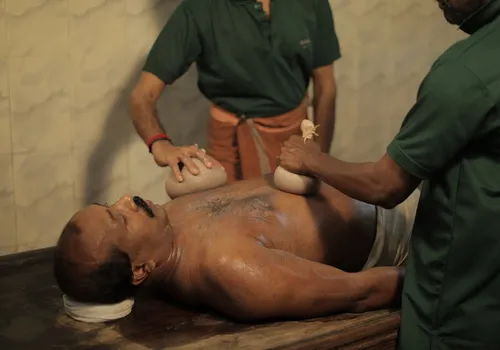
Understanding Knee Pain — The Ayurvedic Perspective
In Ayurveda, knee pain and osteoarthritis are primarily understood as Sandhivata — a condition caused by the aggravation of Vata dosha in the joints. The knee joint (Janu Sandhi) is one of the most commonly affected weight-bearing joints. When Vata increases due to age, overuse, or constitutional factors, it depletes the natural lubrication (Shleshaka Kapha) that protects the joint surfaces, leading to cartilage wear, pain, and stiffness.
The Ayurvedic perspective recognizes that knee degeneration is not simply a local mechanical problem. It reflects a systemic imbalance where Vata dries out the joint tissues while Kapha, which normally provides cushioning and lubrication, becomes depleted. Toxin accumulation (Ama) in the joint space further aggravates inflammation. This is why painkillers and steroid injections provide only temporary relief; they do not address the underlying dosha imbalance or restore joint nourishment.
Common Types of Knee Conditions
Osteoarthritis (Sandhivata)
The most prevalent knee condition, particularly in patients over 50. Progressive loss of articular cartilage leads to bone-on-bone contact, causing pain during weight-bearing activities, morning stiffness, crepitus (crackling sounds), and gradual loss of range of motion. Graded from I to IV based on severity.
Meniscus Tear
The meniscus is a C-shaped piece of cartilage that acts as a shock absorber between the thighbone and shinbone. Tears can occur from sudden twisting movements or from gradual wear. Symptoms include pain along the joint line, swelling, locking or catching of the knee, and difficulty squatting or kneeling.
Rheumatoid Arthritis (Amavata)
An autoimmune condition where the body's immune system attacks the joint lining (synovium). In Ayurveda, this is understood as Amavata, where undigested metabolic toxins (Ama) combine with aggravated Vata and settle in the joints. Symptoms include symmetrical joint swelling, warmth, morning stiffness lasting over an hour, and fatigue. If rheumatoid arthritis affects joints beyond the knee, see our dedicated rheumatoid arthritis (Amavata) treatment page.
Post-Surgical Knee Pain
Some patients experience persistent pain or stiffness after arthroscopic surgery, meniscectomy, or other knee procedures. Ayurvedic rehabilitation helps reduce residual inflammation, improve tissue healing, restore joint mobility, and strengthen the muscles that support the knee.
Why Conventional Treatments Often Fall Short
Standard treatment for knee pain typically follows a predictable path: painkillers, anti-inflammatory drugs, steroid injections, and eventually knee replacement surgery. While these approaches manage symptoms, they do not address why the joint is degenerating in the first place. Painkillers mask the pain while the cartilage continues to wear. Steroid injections may actually accelerate cartilage loss with repeated use. And knee replacement, while sometimes necessary, is a major surgery with significant recovery time and potential complications.
At Agasthya Ayurvedic Medical Centre, our approach works differently. By correcting the underlying Vata-Kapha imbalance, nourishing the joint tissues from within, and using targeted therapies like Upanaham and Kulathakizhi to deliver healing directly to the knee, we help the body restore its own joint health naturally.
Signs & Symptoms of Knee Arthritis
Knee osteoarthritis (Sandhivata) develops gradually, and the earliest signs are easy to dismiss as ordinary ageing. Recognising them early gives Ayurvedic treatment the best chance to protect the cartilage you still have. These are the symptoms patients most often describe when they come to us:
Pain on weight-bearing — climbing or descending stairs, standing up from a chair, squatting, or walking longer distances.
Morning stiffness that loosens once you start moving — usually under 30 minutes in osteoarthritis (longer stiffness can point to rheumatoid arthritis).
Crepitus — a grinding, crackling or clicking sensation when you bend or straighten the knee.
Swelling around the joint, sometimes warm to the touch, after activity or at the end of the day.
Instability or "giving way" — the knee buckling, or feeling unsteady on uneven ground.
Reduced range of motion — difficulty fully straightening or bending the knee, sitting cross-legged, or getting up from the floor.
When to seek medical care urgently
Ayurvedic treatment is for chronic, degenerative knee pain — not acute emergencies. Please get conventional emergency assessment first if you have any of the following:
- Sudden, severe swelling with intense pain or an inability to put weight on the leg (possible fracture or acute injury).
- A hot, red, swollen knee with fever — this can signal a joint infection (septic arthritis), which is a medical emergency.
- The knee locking completely or repeatedly giving way after a twisting injury (possible significant meniscus or ligament tear).
- Calf pain, redness or swelling below the knee — needs assessment to rule out a blood clot.
How Knee Arthritis Is Diagnosed
An accurate diagnosis shapes the whole treatment plan — it tells us how much cartilage is left to protect and how realistic our goals can be. Diagnosis combines a clinical examination with imaging:
- Clinical examination — the doctor checks the knee for tenderness, swelling, warmth, range of motion, crepitus, alignment, and stability, and assesses how you walk and bear weight.
- X-ray — the primary imaging for osteoarthritis. It shows joint-space narrowing, bone spurs (osteophytes), and the degree of degeneration, and is used to grade the arthritis.
- MRI — used when soft-tissue injury is suspected (meniscus tear, ligament damage) or when the picture is unclear on X-ray, as it shows cartilage, menisci and ligaments in detail.
Reading Your X-ray — The Kellgren–Lawrence Grades
Knee osteoarthritis is graded I to IV on X-ray using the Kellgren–Lawrence system. The grade matters because it sets honest expectations for what treatment can achieve — Ayurvedic therapy works best when there is still cartilage to nourish and protect.
| Grade | What the X-ray shows | What it means for treatment |
|---|---|---|
| Grade I (Doubtful) | Possible slight joint-space narrowing; tiny bone spurs beginning to form. | Minimal symptoms. The ideal stage to intervene and protect the joint. |
| Grade II (Mild) | Definite small osteophytes; joint-space narrowing begins. Cartilage still largely intact. | Pain after activity, occasional stiffness. Responds very well to treatment. |
| Grade III (Moderate) | Multiple osteophytes, clear narrowing, some bone hardening (sclerosis) and early deformity. | Pain with regular activity, swelling, stiffness. Still gains meaningful relief. |
| Grade IV (Severe) | Large osteophytes, marked narrowing with bone-on-bone contact and definite deformity. | Constant pain, often at rest. Goal shifts to relief and mobility, not reversal. |
Already have an X-ray or MRI report? Send it to us on WhatsApp. Dr. Bose's team will review the likely grade and tell you honestly whether our treatment can help — before you plan a visit.
Share Your Report on WhatsAppKnee Replacement vs Ayurvedic Treatment — An Honest Comparison
If you've been advised a knee replacement, it's worth understanding both paths before you decide. We'll be honest: surgery is sometimes the right choice. But for many patients — especially Grade I-III osteoarthritis, and those who simply want to delay or avoid an operation — Ayurvedic treatment offers real relief without the risks of surgery.
Knee Replacement Surgery
- Major surgery under anaesthesia, removing and replacing the joint
- 6-12 weeks of recovery plus months of physiotherapy
- Significant cost; implant typically lasts 15-20 years and may need revision
- Surgical risks — infection, blood clots, implant loosening, stiffness
- Irreversible once done
Ayurvedic Treatment at Agasthya
- Non-surgical and non-invasive — no anaesthesia, no incision
- A 7-21 day in-patient stay; you stay mobile throughout
- A fraction of the cost of joint-replacement surgery
- Addresses the underlying Vata-Kapha imbalance and nourishes the joint
- Reversible path — you can still choose surgery later if you need to
When surgery may still be the right choice
In end-stage (Grade IV) arthritis with severe deformity, bone-on-bone contact and constant pain at rest, a replacement may give the best long-term result — and we will tell you so honestly. Even then, many patients first try a course of Ayurvedic treatment for relief, or use it to recover better and faster after surgery.
Conditions We Treat
Our specialized treatment protocols address a wide range of knee and joint conditions. Many of our patients come to us after being advised knee replacement surgery, and leave without needing it.
Osteoarthritis (Sandhivata)
Progressive wear and tear of knee cartilage causing pain, swelling, stiffness, and reduced range of motion. The most common form of knee arthritis, especially in those over 50.
Meniscus Tear
Damage to the crescent-shaped cartilage that cushions the knee joint, causing pain, swelling, locking, and difficulty with bending or straightening the knee.
Rheumatoid Arthritis
Autoimmune condition causing chronic inflammation of the knee joint lining, leading to pain, warmth, swelling, and progressive joint damage if untreated.
Knee Joint Effusion
Accumulation of excess fluid in the knee joint (water on the knee), often resulting from injury, arthritis, or overuse, causing swelling and restricted movement.
Post-Surgical Knee Pain
Persistent pain and stiffness following knee surgery, including arthroscopy or partial procedures, requiring rehabilitation and complementary treatment.
Ligament Injuries
Sprains or tears of the knee ligaments (ACL, MCL, or PCL) causing instability, pain, and swelling. Ayurvedic treatment supports recovery and strengthens surrounding tissues.
Our Treatment Approach — Marma Chikitsa
At the heart of our knee pain treatment is Marma Chikitsa — the ancient science of vital energy points. Our chief physician, Dr. T.D. Bose, trained under the legendary Marmacharya Shri Sudheer Vaidhyar, applies this knowledge to stimulate specific marma points around the knee joint. This helps release blocked energy, improve blood circulation to the joint, reduce swelling, and activate the body's natural healing response in the damaged cartilage and surrounding tissues.
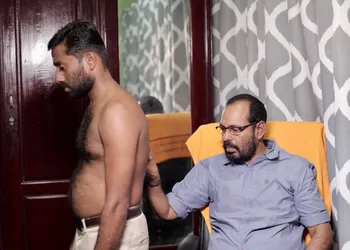
Dr. T.D. Bose during consultation
The Treatment Protocol
1. Assessment
Detailed evaluation including Prakriti (constitution) analysis, examination of knee joint mobility and alignment, review of X-rays and MRI reports, and assessment of gait and weight-bearing patterns.
2. Customized Plan
Based on the grade of arthritis, type of condition, and your overall constitution, a personalized treatment plan is designed combining Marma therapy, Upanaham, Kulathakizhi, and supporting treatments.
3. Daily Treatment
Morning therapy sessions with Marma treatment focused on knee marma points, supporting therapies, internal medicines to reduce Vata and nourish joints, and dietary guidance.
Supporting Therapies for Knee Pain
Marma Chikitsa is enhanced with specialized Ayurvedic therapies that work together to reduce pain, nourish cartilage, and restore knee function:
Marma Abhyangam — Full body therapeutic massage stimulating marma points to reduce pain and inflammation in the musculoskeletal system.
Upanaham (knee poultice) — A warm medicated herbal paste is bandaged over the knee joint, often kept on for hours so the medicine penetrates deep into the joint capsule. Reduces inflammation, eases stiffness, and provides sustained localised pain relief. Especially effective for osteoarthritis and chronic joint stiffness.
Muthira Kizhi — Horse gram bolus therapy that generates therapeutic heat, reduces swelling, and is particularly effective for joint stiffness and rheumatic conditions.
Pizhichil — Continuous stream of warm medicated oil poured over the body, deeply nourishing for joints, nerves, and muscles. Helps reduce Vata and improve overall joint flexibility.
Njavara Kizhi — Medicated rice bolus massage that nourishes weakened muscles, strengthens tissues around the knee, and promotes regeneration of damaged structures.
Ela Kizhi — Herbal leaf bolus massage to reduce inflammation, relieve joint stiffness, and improve local circulation around the knee.
Key Differentiators of Our Approach
Treatment Duration
We offer structured treatment programs based on the severity of your knee condition:
What the research shows
A clinical study published in AYU — the peer-reviewed Ayurveda journal indexed in PubMed Central — followed 50 patients with knee osteoarthritis (Sandhigatavata) treated with a multimodal Ayurvedic protocol that combined external therapies (oil application and sudation/poultice) with internal medicines such as Guggulu and Ashwagandha. The authors reported that around 78% of patients achieved moderate-to-complete improvement, with the benefit sustained at follow-up, and concluded the approach was safe and effective for knee osteoarthritis.
Published research describes the general management of knee osteoarthritis with Ayurveda; it is not a claim about individual outcomes. Results at Agasthya depend on the grade of arthritis and your overall health.
Read the study on PubMed Central →Have questions about your knee pain condition? Get expert advice now.
Why Choose Agasthya for Knee Pain Treatment
What to Expect — Your Treatment Journey
From your first contact to walking pain-free, here's what you can expect when you choose Agasthya for your knee pain treatment:
Step 1: Initial Consultation
Contact us by phone, WhatsApp, or through our contact page. You can have an initial consultation in-person or online. Bring your X-ray or MRI reports if available.
Step 2: Diagnosis & Assessment
Comprehensive evaluation including Prakriti (constitutional) analysis, physical examination of the knee joint, and review of your medical history and imaging reports to determine the grade of arthritis.
Step 3: Customized Treatment Plan
Based on your assessment, the doctor creates a personalized treatment plan with specific therapies including Upanaham, Kulathakizhi, and Njavarakizhi, duration, internal medicines, and expected outcomes.
Step 4: Daily Treatment Sessions
Morning therapy sessions including Marma treatment focused on knee marma points and supporting therapies. Internal medicines are provided. Rest and gentle movement between sessions.
Step 5: Diet & Lifestyle Guidance
Therapeutic diet during your stay. Education on knee-friendly exercises, weight management, and lifestyle modifications to protect your joints long-term.
Step 6: Follow-up Care
Take-home medicines and detailed instructions for home care including oil application techniques. Follow-up consultations available in-person or online to monitor progress.
Diet, Lifestyle & Movement for Healthy Knees
Treatment works best when supported at home. In Ayurveda, knee osteoarthritis is a Vata-aggravated condition worsened by Ama (metabolic toxins), so diet and daily habits make a real difference to how the joint feels and how slowly it degenerates. Our doctors tailor this guidance to your constitution — the principles below are a starting point.
Favour
- Warm, freshly cooked meals — soups, stews, well-cooked vegetables and moong dal
- Healthy fats that lubricate the joints — ghee and sesame oil in moderation
- Anti-inflammatory spices — turmeric, ginger, garlic, ajwain, cumin
- Whole grains and easily digestible proteins
- Calcium- and vitamin-D-supporting foods; adequate warm water through the day
Avoid
- Cold, dry, leftover and processed foods, which aggravate Vata
- Excess refined sugar, fried and fast foods, which worsen inflammation and Ama
- Carbonated drinks and excess caffeine
- Curd at night and an excess of sour or fermented foods
- Skipping meals or eating at irregular times
Lifestyle & Movement
The knee needs gentle, regular movement — complete rest stiffens the joint, while over-exertion wears it. The aim is to stay active without loading the joint.
- Maintain a healthy weight — every kilogram lost takes several kilograms of load off the knee with each step.
- Choose low-impact movement — slow walking on level ground, stationary cycling, and water-based exercise are easiest on the joint.
- Strengthen with supervised yoga — gentle postures that build the quadriceps and improve flexibility, taught and adjusted to your grade of arthritis during your stay rather than self-prescribed.
- Keep the joint warm — apply medicated oil as advised, and avoid cold drafts or air-conditioning blowing directly on the knee.
- Protect the joint — avoid deep squatting, sitting cross-legged for long periods, repeated stair climbing and prolonged standing; wear supportive footwear and avoid high heels.
Always begin a new exercise routine under guidance — the right movement for a Grade II knee can overload a Grade IV one. Our doctors teach a routine matched to your condition before you go home.
Related Articles
A torn meniscus doesn't always need surgery. How Ayurvedic therapy relieves meniscus pain, swelling and locking — and the patient outcomes behind it.
Chronic pain often causes stress and sleep problems. Learn how Shirodhara therapy complements joint pain treatment for holistic recovery.
Related Conditions
Many patients with knee problems also experience back pain. Learn more about our treatment:
Ayurvedic Back Pain Treatment →Disc problems can sometimes cause referred pain in the legs and knees. Learn more:
Disc Bulge Treatment Without Surgery →Sciatica can cause pain radiating from the back down to the knee. Learn about our treatment:
Sciatica Treatment Without Surgery →Arthritis patients often have cervical issues too. Learn about our neck pain treatment:
Cervical Spondylosis Treatment →Patient Success Stories
Read what patients with knee pain and arthritis have to say about their experience at Agasthya:
"I admitted my mother for knee pain — it was actually a surgical case. But they gave fantastic treatment for her, and now she is able to walk. The receptionists are very responsible and the doctors are..." Read more
"We first got treatment in 2009 — my wife was cured completely. When both of us had back and knee pain issues again, we visited in 2024 for 14 days. This is one of the most genuine centres I have ever ..." Read more
"I'm very happy to express my gratitude to the Agasthya Ayurvedic Medical Centre — I got free of my severe knee pain after the treatment, thanks to the skilled doctors and staff and the positive experi..." Read more
Watch: Patients Share Their Recovery Stories
Patient Recovery Story
Patient Recovery Story
Frequently Asked Questions
How long does Ayurvedic treatment for knee pain take?
Can Ayurveda help avoid knee replacement surgery?
What therapies does Agasthya use specifically for the knee?
Is the treatment effective for both osteoarthritis and rheumatoid arthritis?
Can elderly patients undergo knee pain treatment?
What lifestyle changes are needed after treatment?
Is Ayurvedic treatment effective for bone-on-bone (Grade IV) knee arthritis?
How soon will I see results, and will I be able to walk during treatment?
What do the Grade 1, 2, 3, and 4 stages of knee osteoarthritis mean?
Do you offer Janu Basti (Janu Vasti) for knee pain?
What foods should I avoid if I have knee arthritis?
Start Your Recovery Today
Don't let knee pain limit your life. Whether you're dealing with osteoarthritis, a meniscus tear, or chronic joint stiffness, our team is ready to help you find lasting relief through authentic Ayurvedic treatment.
Call us: +91 93884 77762
Online consultations available — Get expert advice from anywhere in the world
Medically reviewed by Dr. T.D. Bose, Chief Physician, Agasthya Ayurvedic Hospital. Last updated: June 27, 2026.