Sciatica Treatment in Kerala
Living with shooting pain down your leg?
Sciatica can make even simple activities like walking, sitting, or sleeping unbearable. At Kerala's NABH-certified Agasthya Ayurvedic Medical Centre, our sciatica treatment in Kerala targets the root cause of sciatic nerve pain using Marma Chikitsa and specialized Ayurvedic therapies. Over 30+ years, we have helped thousands of patients from India, UAE, Canada, and Europe avoid surgery and return to pain-free living.
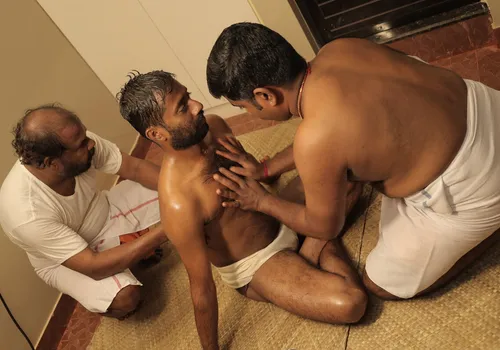
Understanding Sciatica — The Ayurvedic Perspective
In Ayurveda, sciatica is known as Gridhrasi, a condition described in detail in classical texts like the Charaka Samhita and Sushruta Samhita. The name derives from the word Gridhra (vulture), referring to the altered gait of a person suffering from this condition. Ayurveda classifies Gridhrasi as a Vata Vyadhi (disease caused by Vata dosha imbalance), specifically involving the Ruk (pain) and Toda (pricking sensation) along the path of the sciatic nerve.
The sciatic nerve is the longest and thickest nerve in the body, running from the lower back through the buttock and down each leg to the foot. When this nerve is compressed or irritated, it produces the characteristic shooting pain, numbness, tingling, or weakness that defines sciatica. The compression most commonly occurs at the lumbar spine due to a L4-L5 or L5-S1 disc bulge or herniation, bone spurs, or spinal stenosis.
From the Ayurvedic perspective, Gridhrasi develops when aggravated Vata dosha accumulates in the lower back and pelvic region, disrupting the normal flow of energy through the nerve channels (Srotas). Contributing factors include poor digestion leading to toxin buildup (Ama), weakened tissues from sedentary lifestyle, and mechanical strain on the spine. This understanding guides our treatment approach at Agasthya Ayurvedic Medical Centre, where we address both the nerve compression and the underlying dosha imbalance.
Types of Sciatica
Acute vs. Chronic Sciatica
Acute sciatica develops suddenly and typically resolves within 4-6 weeks with proper treatment. Chronic sciatica persists beyond 12 weeks and often indicates ongoing nerve compression from structural issues such as disc herniation or spinal stenosis. Chronic cases require a more comprehensive and sustained treatment approach.
Lumbar Radiculopathy
The most common form of sciatica, caused by compression of a spinal nerve root in the lumbar region. This typically results from disc bulge or herniation at the L4-L5 or L5-S1 levels. The pain follows a specific pattern depending on which nerve root is affected, and may be accompanied by numbness or weakness in the leg or foot.
Piriformis Syndrome
A less common but frequently overlooked cause of sciatica. The piriformis muscle, located deep in the buttock, can tighten or spasm and compress the sciatic nerve as it passes beneath (or sometimes through) the muscle. This condition is often triggered by prolonged sitting, overuse during physical activity, or trauma to the buttock area.
Common Causes of Sciatica
Sciatica is not a diagnosis in itself but a symptom of an underlying condition affecting the sciatic nerve. The most common causes include herniated or bulging discs (accounting for roughly 90% of cases), spinal stenosis (narrowing of the spinal canal), spondylolisthesis (slippage of one vertebra over another), and piriformis syndrome. Less common causes include spinal tumors, infections, and injuries.
Modern lifestyle factors significantly contribute to the rising prevalence of sciatica. Prolonged sitting at desks, lack of core-strengthening exercise, poor lifting techniques, obesity, and age-related disc degeneration all increase the risk. At Agasthya, we take all of these factors into account when designing your treatment plan, combining time-tested Ayurvedic therapies with practical guidance on posture, movement, and lifestyle changes.
Signs & Symptoms of Sciatica
Sciatica is defined by pain that travels along the path of the sciatic nerve — from the lower back, through the buttock, and down the back of one leg. The exact symptoms depend on which nerve root is compressed and how severely. The most common warning signs are:
Radiating leg pain: A sharp, burning, or electric-shock-like pain that shoots from the lower back or buttock down the thigh and calf, sometimes into the foot — usually on one side.
Numbness or tingling: A "pins and needles" sensation or reduced feeling along the back or outer leg and foot, following the nerve's path.
Muscle weakness: Weakness when lifting the foot or big toe ("foot drop"), or a sense that the leg may give way when standing or climbing stairs.
Pain that worsens with sitting, coughing, or sneezing: Prolonged sitting, bending forward, coughing, or straining often intensifies the pain, because these raise pressure on the compressed nerve.
Difficulty walking or standing straight: Many patients adopt a stooped, altered gait to relieve the pressure — the very posture Ayurveda named Gridhrasi ("vulture-like gait") after.
Sciatica almost always affects one leg at a time. Pain in both legs (bilateral sciatica), or pain with any loss of bladder or bowel control, is far less common and needs urgent assessment — see below.
When to seek care urgently
Loss of bladder or bowel control, numbness around the groin or inner thighs (the "saddle" area), or rapidly worsening weakness in both legs can signal cauda equina syndrome — a rare but serious compression of the nerve bundle at the base of the spine that needs emergency medical attention. These red-flag symptoms are uncommon, but if you have them, seek hospital care immediately before considering any elective treatment.
How Sciatica Is Diagnosed
Sciatica is a symptom, not a disease in itself — so an accurate diagnosis is really about finding what is compressing the sciatic nerve and where. That answer shapes the entire treatment plan. Diagnosis usually combines:
Clinical & neurological examination: Our doctors assess your gait, posture, reflexes, muscle strength, and sensation, and perform nerve-tension tests such as the straight-leg raise (Lasègue's test) to confirm nerve-root irritation and localise the affected level.
MRI scan (the gold standard): An MRI of the lumbar spine shows the discs, nerve roots, and the exact point and degree of compression. We ask every patient to share a recent MRI so we can plan treatment precisely and give an honest prognosis.
X-ray, CT, or nerve-conduction study (when needed): Useful for assessing bone alignment, disc-space narrowing, spondylolisthesis, or ruling out other causes of leg pain.
Decoding Your MRI Report
Lumbar-spine MRI reports use specific phrases to describe why the sciatic nerve is being pinched. Knowing them helps you understand your own diagnosis:
Nerve root compression / impingement
A disc or bony overgrowth is pressing directly on a spinal nerve root — the most direct cause of sciatic pain.
Neural foraminal stenosis
Narrowing of the bony openings where nerve roots exit the spine, squeezing the nerve as it leaves the canal.
Central canal stenosis
Narrowing of the main spinal canal, which can compress several nerves at once and sometimes cause pain in both legs.
Radiculopathy
The clinical term for nerve-root dysfunction — the pain, numbness, or weakness that results from the compression above.
What the research shows
Conservative, non-surgical care has measurable evidence behind it. A clinical study published in the International Journal of Yoga and indexed in the U.S. National Library of Medicine (PubMed Central) evaluated external oleation (medicated-oil therapy) alongside supervised therapeutic postures in 60 patients with sciatica (Gridhrasi), and reported a statistically significant improvement in pain, tenderness, walking difficulty, and the straight-leg-raise test over four weeks. It is consistent with what we see across 10,000+ cases: oil-based marma therapies combined with guided movement can relieve sciatic nerve pain without surgery. Every patient is different, and we give an honest assessment of your reports before you travel.
Already have an MRI or X-ray? Send it to us for a free, no-obligation review.
Get a Free MRI ReviewConditions We Treat
Our specialized treatment protocols cover the full spectrum of sciatica-related conditions. Many of our patients come to us after being advised surgery or after years of managing pain with medication.
L4-L5 Sciatica
Nerve compression at the L4-L5 spinal segment, one of the most common causes of sciatica. Causes pain radiating down the outer leg, often with weakness in lifting the foot.
L5-S1 Sciatica
Nerve compression at the L5-S1 level causing pain along the back of the thigh and calf, often extending to the outer foot. May include difficulty rising on toes.
Piriformis Syndrome
Sciatic nerve irritation caused by tightness or spasm of the piriformis muscle deep in the buttock. Often misdiagnosed as disc-related sciatica.
Bilateral Sciatica
Sciatic pain affecting both legs, typically caused by central disc herniation or spinal canal stenosis. Requires careful assessment and a comprehensive treatment approach.
Post-Surgical Sciatica
Persistent or recurring sciatic pain after spinal surgery such as discectomy or laminectomy. Ayurvedic treatment supports nerve recovery and tissue healing.
Chronic Sciatic Nerve Pain
Long-standing sciatica lasting months or years that has not responded adequately to conventional treatments including physiotherapy and medication.
Our Treatment Approach — Marma Chikitsa
Our primary treatment for sciatica is Marma Chikitsa, the ancient Ayurvedic science of vital energy points. Our chief physician, Dr. T.D. Bose, trained under the legendary Marmacharya Shri Sudheer Vaidhyar, applies precise stimulation to specific marma points along the spine and lower limbs. This releases blocked energy pathways, reduces nerve compression, calms muscle spasms, and restores proper nerve conduction along the sciatic pathway.
Unlike conventional approaches that rely on painkillers or steroid injections to mask symptoms, Marma Chikitsa works to resolve the underlying cause of sciatic nerve irritation. For disc-related sciatica, treatment focuses on reducing disc pressure on the nerve root. For piriformis syndrome, the therapy targets the deep muscular tension that traps the nerve.
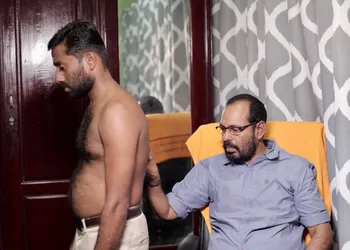
Dr. T.D. Bose during consultation
The Treatment Protocol
1. Assessment
Thorough evaluation including Prakriti (constitution) analysis, neurological examination, assessment of pain patterns and nerve function, and review of MRI/X-ray reports.
2. Customized Plan
A personalized treatment plan is designed based on the type and severity of your sciatica, combining Marma therapy with specific supporting treatments for optimal nerve recovery.
3. Daily Treatment
Morning therapy sessions with targeted Marma treatment for the sciatic pathway, supporting therapies, internal medicines, and dietary guidance tailored to your recovery.
Supporting Therapies for Sciatica
Marma Chikitsa is complemented with specialized Ayurvedic therapies that reduce inflammation, nourish damaged nerves, and restore mobility:
Marma Abhyangam — Full body therapeutic massage stimulating marma points along the sciatic pathway to reduce nerve inflammation and improve energy flow.
Upanaham — A warm medicated herbal paste poultice bandaged over the affected lumbar segment, often kept on for hours. Sustained, localised penetration into the paraspinal tissue around the compressed nerve root reduces inflammation and relieves radiating leg pain.
Dhanyamla Dhara — A continuous warm stream of fermented grain decoction over the back. Particularly effective for sciatic flare-ups and acute Vata-aggravated radiating pain that has not responded to other approaches.
Pizhichil — Continuous stream of warm medicated oil poured over the body, deeply nourishing for damaged nerves and tight muscles along the sciatic pathway.
Njavara Kizhi — Medicated rice bolus massage that nourishes weakened muscles, strengthens the spine, and promotes nerve tissue regeneration.
Muthira Kizhi — Horse gram bolus therapy, particularly effective for reducing inflammation and stiffness in the lower back and hip region.
Ela Kizhi — Herbal leaf bolus massage to reduce inflammation, ease muscle spasms, and improve circulation in the affected areas.
Key Differentiators of Our Approach
Treatment Duration
We offer structured treatment programs based on the severity of your sciatica:
Diet, Lifestyle & Movement for Sciatica Relief
How you eat, sit, and move each day either calms the irritated sciatic nerve or keeps it inflamed. In Ayurveda, Gridhrasi is a Vata disorder, so the aim is to pacify Vata and reduce inflammation around the nerve. Our doctors give every patient personalised guidance — these are the principles we share most often.
Do
Eat warm, freshly cooked, easily digestible meals — they pacify Vata, the dosha behind Gridhrasi.
Favour anti-inflammatory foods: cooked vegetables, whole grains, moong dal, ginger, garlic, and turmeric, with healthy fats like ghee and sesame oil in moderation.
Stay well hydrated and keep warm — cold and dryness aggravate Vata and nerve pain.
Use a firm mattress and sleep on your side with a pillow between the knees to keep the spine neutral.
Get up and move gently every 30–45 minutes if you sit for work, keeping the lower back supported.
Take short, regular walks as pain allows — gentle movement nourishes the nerve better than total rest.
Avoid
Prolonged sitting or driving without breaks — the single biggest aggravator of sciatic pain.
Heavy lifting, forward bending, and twisting the loaded spine.
Cold, dry, stale, or excessively spicy foods, and skipping meals — all increase Vata.
High heels and soft, sagging sofas or mattresses that let the spine slump.
Strenuous gym workouts, deep forward folds, and unsupervised stretching during a flare-up.
Complete, prolonged bed rest — beyond the first day or two it weakens the muscles that support your spine.
Movement — under guidance, not on your own
Gentle, supervised movement is part of recovery, but the wrong stretch during an active flare-up can worsen nerve compression. During your stay, our therapists guide safe mobility and, once the acute pain settles, simple strengthening for the core and lower back. Classical postures such as gentle Bhujangasana (cobra) and Shalabhasana (locust) can help sciatica — but only when introduced at the right stage and within your pain limits. We teach you exactly what to continue at home, and what to avoid, so your recovery holds.
Have questions about your sciatica condition? Get expert advice now.
Why Agasthya for Sciatica Treatment in Kerala
What to Expect — Your Treatment Journey
From your first contact to returning home with lasting relief, here's what you can expect when you choose Agasthya for your sciatica treatment:
Step 1: Initial Consultation
Contact us by phone, WhatsApp, or through our contact page. You can have an initial consultation in-person or online. Bring your MRI/X-ray reports if available.
Step 2: Diagnosis & Assessment
Comprehensive evaluation including neurological testing, assessment of nerve function and reflexes, Prakriti analysis, and review of your medical history and imaging reports.
Step 3: Customized Treatment Plan
Based on your assessment, the doctor creates a personalized treatment plan targeting your specific type of sciatica with appropriate therapies, duration, and expected outcomes.
Step 4: Daily Treatment Sessions
Morning therapy sessions including Marma treatment focused on the sciatic pathway, supporting therapies, and internal medicines. Rest and gentle movement between sessions.
Step 5: Diet & Lifestyle Guidance
Therapeutic diet during your stay. Guidance on posture correction, gentle stretching, and lifestyle modifications to prevent sciatica recurrence.
Step 6: Follow-up Care
Take-home medicines and detailed instructions for home management. Follow-up consultations available in-person or online to monitor your continued recovery.
Related Articles
Sciatica is a common cause of back pain. Read why chronic back pain recurs and what treats the root cause.
Disc bulges are the most common cause of sciatica. See evidence from 10,000+ cases treated without surgery.
Day-by-day guide to non-surgical treatment for disc-related nerve compression at our NABH-certified hospital.
Related Conditions
Sciatica is often linked to underlying back pain conditions. Learn more about our approach:
Ayurvedic Back Pain Treatment →Many sciatica cases involve disc problems. Learn about our specialized disc treatment:
Disc Bulge Treatment Without Surgery →Cervical spine problems can cause radiating pain similar to sciatica. Learn about our neck pain treatment:
Cervical Spondylosis Treatment →Sciatica can sometimes cause referred pain in the knee. Learn about our joint pain treatment:
Knee Pain & Arthritis Treatment →Patient Success Stories
Read what patients with sciatica and related conditions have to say about their experience at Agasthya:
"I have just completed a 21 days treatment for chronic lower back pain. It has been a beneficial experience undergoing this systematic course. I will strongly recommend Agasthya Ayurvedic Medical Cente..." Read more
"I had disc problem and pain in 2 legs for the last 8 years. Dr. T.D. Bose immediately noticed what I had and gave me the special treatment. He is very professional and very honest. After 17 days I can..." Read more
Watch: Patients Share Their Recovery Stories
Kausalya, Kannur
Anil Kumar, Malappuram
Frequently Asked Questions
How long does Ayurvedic treatment for sciatica take?
Can Ayurveda cure sciatica permanently?
What is the success rate of Ayurvedic sciatica treatment?
Is bed rest necessary during treatment?
Can I get sciatica treatment if I'm already taking painkillers?
How soon will I feel relief from sciatic nerve pain?
Which is the best Ayurvedic treatment for sciatica in Kerala?
What foods should I avoid if I have sciatica?
Start Your Recovery from Sciatica Today
Don't let sciatic nerve pain control your life. Whether you're dealing with a recent flare-up or chronic sciatica that hasn't responded to other treatments, our team is ready to help you find lasting relief through authentic Ayurvedic treatment.
Call us: +91 93884 77762
Online consultations available — Get expert advice from anywhere in the world
Medically reviewed by Dr. T.D. Bose, Chief Physician, Agasthya Ayurvedic Hospital. Last updated: July 4, 2026.