Muthira Kizhi: Ayurvedic Bolus Therapy for Joint Pain and Back Pain
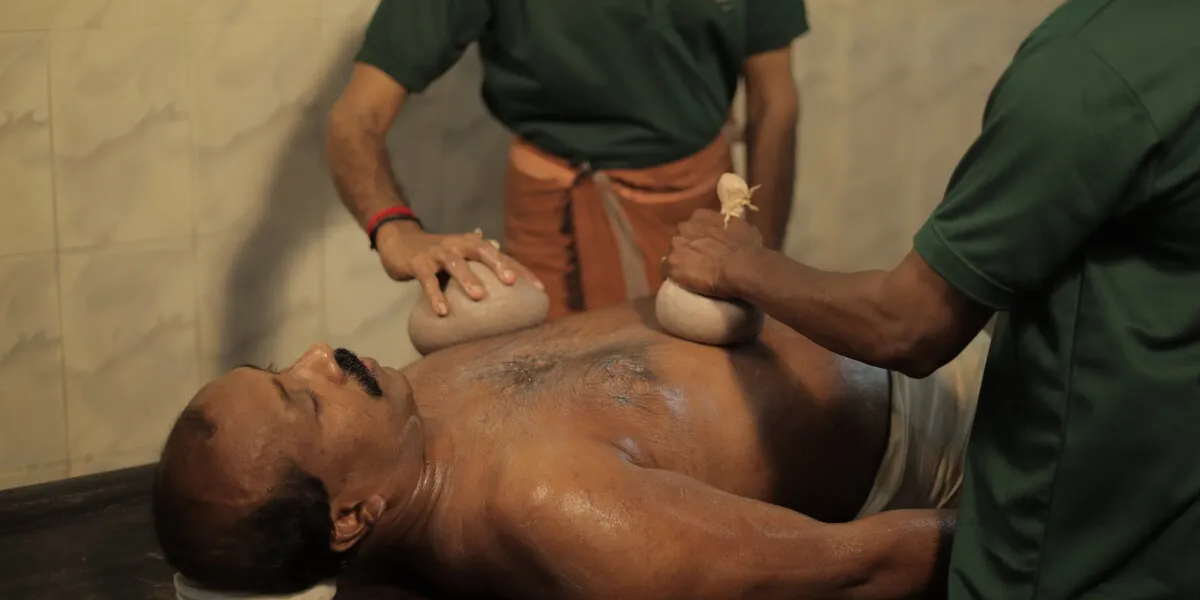
Table of Contents
What Is Muthira Kizhi?
Muthira Kizhi — also called Kulatha Kizhi — is a classical Ayurvedic bolus therapy that uses powdered horse gram (kulatha) as the primary therapeutic agent. Unlike most kizhi treatments that use oil-soaked herbal leaves or cooked rice, Muthira Kizhi is a rooksha (dry) swedam — a dry heat therapy. This makes it uniquely suited for a specific category of musculoskeletal and rheumatic conditions that do not respond well to oily treatments.
The word "kizhi" in Malayalam refers to a bolus or bundle — a small cloth pouch filled with medicinal material. During Muthira Kizhi, horse gram is powdered, heated, packed tightly into linen boluses, and then applied rhythmically over the affected areas of the body by two trained therapists working in synchronized movements.
At Agasthya Ayurvedic Hospital in Kerala, Muthira Kizhi is an essential part of our treatment protocol for back pain, rheumatic conditions, and joint disorders — often prescribed alongside Marma Chikitsa and Marma Abhyangam for comprehensive musculoskeletal care.
Why Horse Gram? The Ayurvedic Science Behind Muthira Kizhi
In Ayurveda, therapeutic materials are chosen based on their gunas (qualities) and their effect on the three doshas. Horse gram (kulatha) has a unique profile:
- Ushna virya (hot potency) — generates therapeutic heat that penetrates deeply into joints and muscles
- Rooksha guna (dry quality) — absorbs excess moisture and reduces Kapha-related swelling and heaviness
- Lekhana karma (scraping action) — clears accumulated metabolic toxins (Ama) from tissue channels
- Vata-Kapha shamaka — balances both Vata and Kapha doshas that are responsible for most joint and back pain conditions
This combination makes horse gram particularly effective for conditions where there is joint swelling, fluid accumulation, stiffness, and heaviness — presentations where oily therapies like Abhyanga or Pizhichil would aggravate the condition by adding more moisture to already Kapha-dominant tissue.
Conditions Treated with Muthira Kizhi
Muthira Kizhi is most effective for:
Rheumatic Conditions
Rheumatoid arthritis and other inflammatory joint conditions characterized by swelling, warmth, and morning stiffness respond well to the dry heat and lekhana action of horse gram. The rooksha property draws out the excess Kapha (inflammatory fluid) from the joints.
Low Back Pain and Lumbar Disorders
Back pain caused by lumbar spondylosis, muscle spasms, and degenerative disc disease can be significantly reduced with Muthira Kizhi. The deep, dry heat relaxes paraspinal muscles and reduces the chronic stiffness that limits mobility in lumbar conditions.
Inflammation of Joints
Acute and chronic joint inflammation — whether from overuse, injury, or degenerative conditions — responds to the anti-inflammatory properties of horse gram applied through repeated, targeted bolus strokes.
Stiff Joints and Restricted Mobility
In conditions where joints are "locked" due to prolonged inflammation or post-injury stiffness, the sustained dry heat of Muthira Kizhi gradually restores range of motion and loosens adhesions.
General Pain and Myalgia
Widespread musculoskeletal pain, body aches, and conditions with a heavy, dull quality of pain are classic indications for rooksha swedana in Ayurveda. Muthira Kizhi provides relief where lighter oil-based therapies are insufficient.
The Muthira Kizhi Procedure
A Muthira Kizhi session at Agasthya typically proceeds as follows:
Preparation: Horse gram is coarsely powdered and mixed with appropriate herbs depending on the patient's condition and the physician's prescription. The mixture is divided into portions, packed into small square linen cloths, and tied securely to form boluses of the right size for the target area.
Heating: The boluses are heated to an optimal therapeutic temperature — hot enough to generate deep tissue penetration but comfortable for the patient's skin. Therapists maintain this temperature throughout the session by regularly reheating the boluses.
Administration: Two trained therapists apply the boluses simultaneously on both sides of the body in rhythmic, synchronized strokes. This bilateral approach ensures even heat distribution and balanced stimulation of marma points and muscle groups. For back pain patients, particular attention is given to the lumbar paraspinal muscles and sacral region.
Duration and course: Each session lasts approximately 45 minutes. A full Muthira Kizhi course is typically 7 to 14 days, administered as part of a broader treatment protocol that includes internal medicines and other appropriate therapies prescribed by the physician.
Muthira Kizhi vs Other Kizhi Therapies
At Agasthya, we use several types of kizhi therapy depending on what the patient's condition requires. Understanding the difference helps explain why the physician prescribes a specific type:
| Therapy | Type | Primary Use |
|---|---|---|
| Muthira Kizhi | Rooksha (dry) swedam | Rheumatic conditions, Kapha-dominant inflammation, stiffness |
| Njavarakizhi | Snigdha (unctuous) swedam | Disc problems, nerve weakness, muscle wasting, Vata-dominant conditions |
| Ela Kizhi | Snigdha swedam | Inflammation with dryness, Vata conditions, nerve pain |
| Muthira Kizhi | Rooksha swedam | Conditions where oil would aggravate — swollen, wet, heavy presentations |
The key distinction: Njavarakizhi uses medicated rice and milk, making it deeply nourishing and anabolic. Muthira Kizhi is lekhana (scraping/reducing) — it is used when the body needs to shed excess Kapha, reduce accumulated toxins, and dry out excessive fluid in tissues.
Dr. T.D. Bose and our physicians assess each patient's condition, body constitution (prakriti), and current doshic imbalance before prescribing which combination of kizhi therapies is appropriate. Many patients receive a sequence — for example, Muthira Kizhi in the initial phase to reduce acute inflammation, followed by Njavarakizhi to rebuild tissue strength.
Who Benefits Most from Muthira Kizhi?
Based on 30+ years of clinical practice at Agasthya, Muthira Kizhi produces the best results for:
- Patients with swollen, inflamed joints — especially when the joint feels warm and heavy
- Rheumatoid arthritis patients — particularly those with morning stiffness and bilateral joint involvement
- Overweight patients with joint pain — the lekhana quality of horse gram addresses both Kapha excess and joint load
- Back pain with stiffness and heaviness — as opposed to back pain that is primarily sharp, shooting, or radiating (which responds better to Vata-targeted therapies)
- Cases where oily treatments are contraindicated — in patients with certain skin conditions, high Kapha constitutions, or conditions where too much moisture would worsen symptoms
Muthira Kizhi is generally not the primary treatment for disc bulge, sciatica, or conditions with significant nerve compression — those cases benefit more from the snigdha (unctuous) therapies like Njavarakizhi and Pizhichil.
Muthira Kizhi at Agasthya — What to Expect
If your treatment protocol at Agasthya includes Muthira Kizhi, here is what the experience looks like:
The therapy room is heated to a comfortable temperature. You will lie on a traditional wooden treatment table (droni). After an initial assessment by the therapist, the session begins. The boluses are applied with firm, rhythmic pressure — not uncomfortable, but distinctly more vigorous than a gentle relaxation massage. Most patients describe the sensation as a deep, penetrating warmth that gradually relieves tension and heaviness in the treated areas.
You may notice mild reddening of the skin after the session — this is normal and indicates improved blood circulation in the treated area. Some patients feel immediate relief from stiffness; others notice gradual improvement over the treatment course.
All Muthira Kizhi treatments at Agasthya are administered under the supervision of our physician team, who adjust the prescription, pressure, and duration based on your daily response to treatment.
Getting Treatment for Back Pain and Joint Conditions in Kerala
Muthira Kizhi is one of many therapies available at Agasthya Ayurvedic Hospital for the treatment of back pain, rheumatic conditions, and joint disorders. Our approach combines classical Ayurvedic therapies with Marma Chikitsa — Dr. T.D. Bose's area of deep specialization — to address the root cause of musculoskeletal conditions.
As an NABH-certified hospital with 10,000+ cases treated and a 4.9/5 patient rating, we provide clinical Ayurvedic treatment — not wellness spa experiences. This distinction matters when you are dealing with a serious condition that requires genuine medical expertise.
Contact us to discuss your condition and find out whether Muthira Kizhi and our broader treatment protocol would be appropriate for you. You can also share your medical reports via WhatsApp for an initial assessment before planning your visit.
Agasthya Ayurvedic Hospital — Ezhupunna, Alappuzha, Kerala. NABH-certified. 30+ years of specialized treatment for back pain, disc conditions, and joint disorders. Book a consultation or WhatsApp us for a faster response.
Frequently Asked Questions About Muthira Kizhi
What is muthira kizhi used for?
Muthira Kizhi (Kulatha Kizhi) is used primarily for rheumatic conditions, low back pain, joint inflammation, stiffness, and general musculoskeletal pain. It is a dry bolus therapy using horse gram, prescribed when the patient's condition involves excess Kapha — such as joint swelling, heaviness, and fluid accumulation in tissues. It is part of a broader treatment protocol alongside other Ayurvedic therapies and internal medicines.
What is the difference between muthira kizhi and njavarakizhi?
The key difference is the therapeutic quality: Muthira Kizhi is a rooksha (dry) therapy that reduces Kapha and is used for inflammatory, swollen, heavy joint conditions. Njavarakizhi is a snigdha (unctuous) therapy that nourishes tissues and is used for Vata conditions, disc problems, nerve weakness, and muscle wasting. A physician determines which is appropriate based on your specific condition and constitution. Many patients receive both as part of a comprehensive protocol.
How many sessions of muthira kizhi are needed?
A typical Muthira Kizhi course is 7 to 14 days, with one session per day as part of a morning treatment programme. The exact duration depends on the condition being treated and the patient's response. Your physician at Agasthya will prescribe the appropriate course after assessing your case.
Is muthira kizhi painful?
No. Muthira Kizhi is not painful. The boluses are applied with firm rhythmic pressure, and the heat is therapeutic rather than uncomfortable. Most patients find it relieving — especially for chronic stiffness and heaviness in joints and muscles. There may be mild skin redness after the session, which is normal and indicates improved circulation.
Can muthira kizhi be done at home?
Muthira Kizhi requires trained Ayurvedic therapists who work in pairs, the correct preparation of horse gram boluses, precise temperature management, and a physician's prescription based on your specific condition. It is not a self-treatment. For best results, it should be received at a qualified Ayurvedic hospital as part of a supervised treatment protocol.
Is horse gram the same as kulatha in Ayurveda?
Yes. Kulatha is the Sanskrit name for horse gram (Macrotyloma uniflorum), called muthira in Malayalam. It is one of the most therapeutically valued legumes in Ayurveda — its hot potency, dry quality, and lekhana (scraping) action make it uniquely effective for reducing Kapha-related heaviness, inflammation, and toxin accumulation in tissues. Kulatha Kizhi and Muthira Kizhi are two names for the same treatment.
Related Treatment
Learn more about this treatment at Agasthya
Written by
Dr. T.D. BoseChief Physician at Agasthya Ayurvedic Medical Centre with 30+ years of experience in Marma Chikitsa and traditional Ayurvedic treatments.
Have questions about this treatment?
Share your reports on WhatsApp for a personalized consultation.