Nasyam: Ayurvedic Nasal Therapy for Cervical Spondylosis, Sinusitis & Migraine
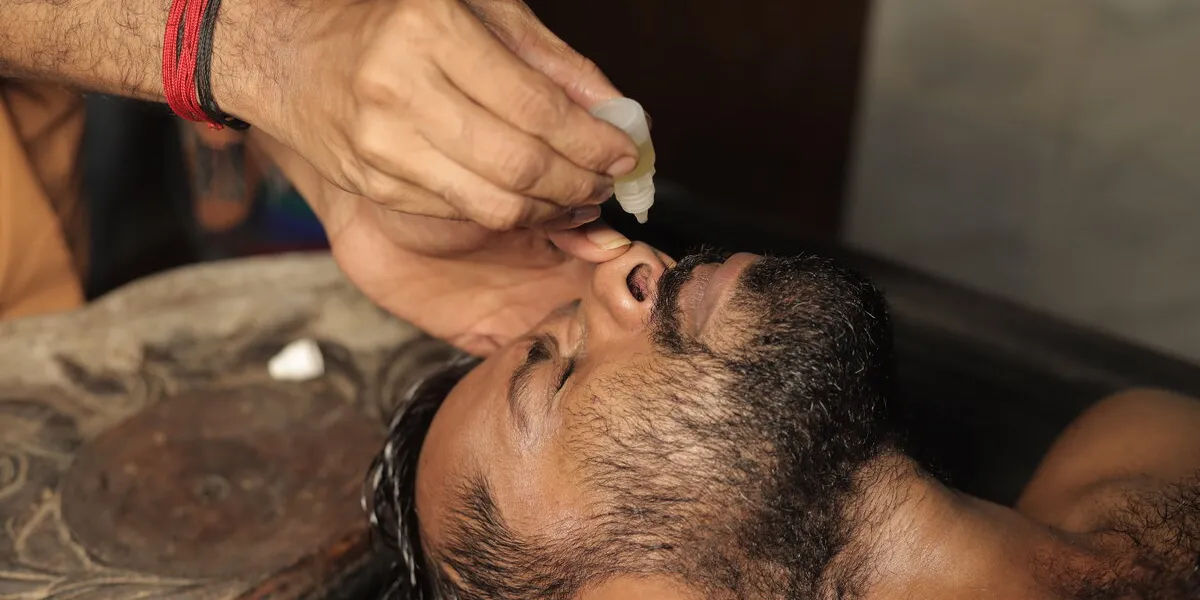
Table of Contents
What Is Nasyam?
Nasyam (also written nasya) is the Ayurvedic Panchakarma procedure in which medicated oils or herbal preparations are instilled into the nostrils, drop by drop, to treat conditions of the head, neck, and upper respiratory tract. In Ayurveda, the nose is regarded as the direct gateway to the head — "nasa hi shiraso dwaram" — so any disorder above the shoulder girdle is addressed at its root through the nasal route.
If you are searching for a non-surgical treatment for cervical spondylosis, chronic sinusitis, or migraine, Nasyam is one of the most targeted therapies Ayurveda offers. It reaches the sinuses, cranial channels, and cervical nerve pathways that oral medicines and external massage cannot fully access.
At Agasthya Ayurvedic Hospital in Ezhupunna, Kerala, Nasyam is a core component of our cervical spondylosis, sinusitis, and frozen shoulder protocols — usually prescribed alongside Marma Abhyangam and Marma Chikitsa, the vital-point therapy in which our chief physician Dr. T.D. Bose specialises.
How Nasyam Works — The Olfactory Pathway
The therapeutic logic of Nasyam is direct: the nasal mucosa is richly supplied with blood vessels and nerve endings, including the olfactory nerve, which connects the nasal cavity to the brain. When medicated oils are administered into the nostrils, they are absorbed through this mucosa and travel through the para-nasal sinuses and the olfactory pathway toward the cranial structures.
This is why Nasyam can influence conditions that seem out of reach of a nasal treatment — cervical disc irritation, tension headaches, even concentration and sleep. The medicated preparation:
- Clears the srotas (channels) of the head, sinuses, throat, and neck, removing accumulated Kapha and inflammatory secretions
- Reduces nerve-root inflammation in the cervical spine that drives neck pain and radiating arm pain
- Lubricates and nourishes the tissues of the head and neck, countering the dryness (Vata) behind degenerative spine changes
- Decongests the para-nasal sinuses at the source rather than only suppressing symptoms
The medicine used is selected by the physician based on the patient's prakriti (constitution) and the specific condition — there is no single "nasyam oil." This individualisation is central to how the treatment is prescribed at Agasthya.
Conditions Treated with Nasyam
Nasyam is most effective for conditions originating in the head, neck, and upper respiratory tract.
Cervical Spondylosis and Cervical Disc Problems
This is one of Nasyam's primary indications. In cervical spondylosis, degeneration of the cervical discs (typically C4–C7) compresses nerve roots, producing neck stiffness, pain, and tingling that radiates into the shoulders and arms. Nasyam delivers medicated oils along the nerve pathway to reduce inflammation and relieve compression from within, while restoring lubrication to the cervical structures.
Chronic Sinusitis and Allergic Rhinitis
Recurrent sinusitis, nasal blocks, and allergic rhinitis respond well to Nasyam because the treatment acts directly on the para-nasal sinuses. By clearing accumulated Kapha and decongesting the channels, it addresses the cause rather than offering temporary symptomatic relief.
Migraine and Tension Headaches
Chronic migraine and tension headaches are often linked, in Ayurvedic understanding, to vitiated doshas and obstruction in the channels of the head. Nasyam reduces both the frequency and intensity of attacks by treating the sinuses and cranial channels at the root.
Frozen Shoulder and Brachial Neuralgia
Because Nasyam clears all channels above the shoulder girdle, it is a valuable part of the treatment for frozen shoulder and brachial neuralgia — particularly when the shoulder problem is connected to cervical nerve involvement. It is combined with Marma therapy targeting the shoulder and neck vital points.
Facial Palsy (Bell's Palsy) and Neurological Conditions
The neurological reach of Nasyam through the olfactory pathway makes it useful in facial palsy, where it supports nerve recovery alongside the broader treatment programme.
Hair Fall, Premature Greying, and Concentration
Classical texts list Nasyam among the therapies that strengthen the structures of the head — supporting hair health, memory, and concentration when used as part of a constitutional treatment.
The Nasyam Procedure — Step by Step
A Nasyam session at Agasthya follows the classical three-stage structure of purva karma (preparation), pradhana karma (main procedure), and paschat karma (post-procedure care).
1. Preparation (purva karma). The face, neck, shoulders, and chest receive a gentle massage with warm medicated oil, followed by mild steam (swedana) to the same region. This opens the channels and prepares the tissues so the medicine is absorbed effectively.
2. Administration (pradhana karma). The patient lies in a slightly reclined position with the head tilted back. Warm medicated oil or herbal preparation is instilled into each nostril, drop by drop. The patient breathes in gently so the medicine travels through the nasal passages toward the sinuses and cranial channels. The head is held in position for a few minutes to allow full absorption.
3. Post-procedure care (paschat karma). Two classical follow-up therapies deepen the effect:
- Dhoomapanam — inhalation of medicated herbal smoke, which further clears the channels
- Kabalam — gargling with medicated liquid to cleanse the throat and oral cavity
Mild drainage from the sinuses after the procedure is normal and is a sign the treatment is working.
| Stage | What happens | Purpose |
|---|---|---|
| Purva karma | Face/neck/chest oil massage + steam | Open and prepare the channels |
| Pradhana karma | Medicated oil instilled into nostrils | Treat sinuses, cranial and cervical channels |
| Paschat karma | Dhoomapanam + Kabalam | Deepen cleansing of head, throat, sinuses |
Each session takes 30–45 minutes, and a typical course runs 7 to 14 days as one part of a broader treatment programme that includes Marma therapy and internal Ayurvedic medicines.
Nasyam in Cervical Spondylosis Treatment at Agasthya
For cervical spondylosis patients, Nasyam is rarely used in isolation. At Agasthya it is sequenced with Marma Abhyangam — stimulation of the vital points around the neck, shoulder girdle, and upper back — and with internal medicines that address the underlying doshic imbalance.
The combination is deliberate: Marma Chikitsa works on the vital points and the musculature around the cervical spine, while Nasyam delivers medicine through the nasal route to the deeper cranial and cervical channels. Treating the same problem through two complementary pathways is what allows many patients to recover mobility and avoid the surgery they were advised to consider.
Over 30+ years and 10,000+ cases treated — many of them patients who had been advised surgery — this integrated approach has helped roughly 90–95% of patients see significant improvement. Dr. T.D. Bose trained under Marmacharya Shri Sudheer Vaidhyar, and that lineage shapes how Marma therapy and Panchakarma procedures like Nasyam are combined here.
A Patient's Experience
Neelima Viswan came to Agasthya with chronic back and shoulder pain. After a course of Marma-based therapies and customised Ayurvedic care under Dr. T.D. Bose and Dr. Sreeju Bose, she described the result simply:
"The team applied authentic Marma-based therapies and customised Ayurvedic care to address my chronic back and shoulder pain. The facility is exceptionally neat, peaceful and well-maintained, creating a calming environment that supported my recovery. I wholeheartedly recommend Agasthya to anyone seeking knowledgeable expertise and effective holistic healing."
Shoulder and neck conditions like Neelima's are exactly the territory Nasyam and Marma therapy are designed to treat together. You can read more verified patient outcomes on our testimonials page.
Is Nasyam Right for Your Condition?
If you are dealing with persistent neck pain, recurring sinusitis, chronic migraine, or a frozen shoulder that has not responded to conventional treatment, Nasyam — as part of a properly prescribed protocol — may offer relief at a fraction of what surgery or long-term medication would cost.
As an NABH-certified hospital with a 4.9/5 rating across 200+ reviews, Agasthya provides clinical Ayurvedic treatment, not spa-style wellness. The right procedure, the right medicine, and the right duration are decided only after the physician assesses your case.
Contact us to discuss your condition, or WhatsApp us with your medical reports for an initial assessment before planning your visit.
Agasthya Ayurvedic Hospital — Ezhupunna, Alappuzha, Kerala. NABH-certified. 30+ years of specialised treatment for cervical spondylosis, disc conditions, and joint disorders. Book a consultation or WhatsApp us for a faster response.
Frequently Asked Questions About Nasyam
What is Nasyam treatment used for?
Nasyam is used for conditions of the head, neck, and upper respiratory tract — most commonly cervical spondylosis and cervical disc problems (C4–C7), chronic sinusitis and allergic rhinitis, migraine and tension headaches, frozen shoulder, brachial neuralgia, facial palsy (Bell's palsy), and neck stiffness. It is also used to support memory, concentration, and hair health as part of a constitutional treatment. At Agasthya it is usually prescribed alongside Marma Abhyangam and internal medicines.
How does Nasyam help cervical spondylosis?
In cervical spondylosis, degenerated discs compress the cervical nerve roots, causing neck pain and radiating arm pain. Nasyam delivers medicated oils through the nasal route to the cranial and cervical channels, reducing nerve-root inflammation and restoring lubrication to the cervical structures from within. Combined with Marma therapy on the neck and shoulder vital points, it relieves pain and stiffness and helps many patients avoid surgery.
Is Nasyam painful?
No. The preparatory face and neck massage is relaxing, and the nasal instillation produces only a mild sensation of pressure or warmth that passes quickly. Some patients notice light drainage from the sinuses afterward, which is a normal sign that the treatment is clearing the channels. Most patients find the overall experience calming.
How many days of Nasyam are needed?
A typical Nasyam course at Agasthya is 7 to 14 days, with one session per day. Mild seasonal sinusitis or mild neck stiffness may need around 7 days, while chronic cervical spondylosis, long-standing migraine, or frozen shoulder usually call for a 14-day course. Nasyam is one component of a broader treatment programme that includes Marma Abhyangam and internal Ayurvedic medicines.
Can Nasyam be done at home?
No. Nasyam requires correct preparation of medicated oils, precise temperature and dosage, the preparatory massage and steam, and the post-procedure Dhoomapanam and Kabalam — all under a physician's prescription based on your specific condition and constitution. It should be received at a qualified Ayurvedic hospital as part of a supervised protocol, not attempted as a self-treatment.
Does Nasyam help with sinusitis and migraine?
Yes. Nasyam acts directly on the para-nasal sinuses and cranial channels, which makes it effective for chronic sinusitis, allergic rhinitis, and migraine. By clearing accumulated Kapha and decongesting the sinuses at the source, it reduces both the frequency and intensity of migraine attacks and addresses the root cause of recurrent sinus problems rather than only relieving symptoms.
Related Treatment
Learn more about this treatment at Agasthya
Written by
Dr. T.D. BoseChief Physician at Agasthya Ayurvedic Medical Centre with 30+ years of experience in Marma Chikitsa and traditional Ayurvedic treatments.
Have questions about this treatment?
Share your reports on WhatsApp for a personalized consultation.