What Happens During a 14-Day In-Patient Ayurvedic Treatment? A Day-by-Day Guide
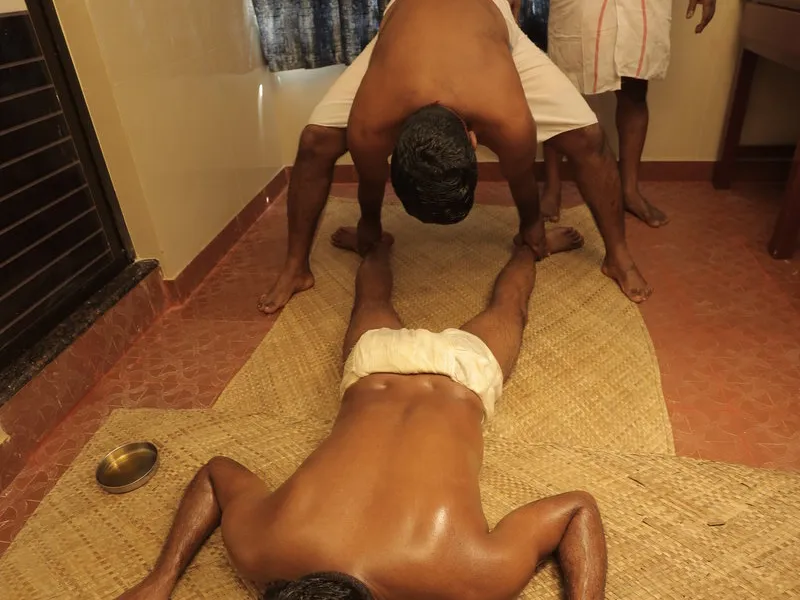
Table of Contents
What a 14-Day In-Patient Ayurvedic Treatment Actually Looks Like
A 14-day in-patient ayurvedic treatment in Kerala means staying at the hospital for two weeks while you receive a personalised sequence of hands-on therapies every day, eat prepared Ayurvedic meals, and rest under medical supervision. Each morning you undergo one to two hours of treatment — a therapeutic oil massage followed by a heating or strengthening therapy such as steam, an oil bath, or a medicated rice-bolus application — after which you rest, walk gently, and let the medicines work. It is structured clinical care, not a spa holiday.
If you have been advised a two-week programme for back pain, a disc bulge, sciatica, cervical spondylosis, or knee arthritis, this guide walks you through exactly what those 14 days involve — from the day you arrive to the day you go home with your recovery plan. At Agasthya Ayurvedic Hospital, an NABH-certified hospital that has treated more than 10,000 musculoskeletal cases over three decades, roughly 90–95% of our patients report significant improvement, many after being told surgery was their only option.
Why 14 Days? Who a Two-Week Programme Is For
Treatment duration is decided by your physician based on the severity and chronicity of your condition — not by a fixed package. At Agasthya, in-patient programmes typically run 7, 10, 14, 18, or 21 days. A 14-day course is the most commonly prescribed length for moderate joint and spine conditions because it is long enough to move through all three phases of recovery — calming the pain, working the deeper tissues, and rebuilding strength — without rushing any of them.
A 14-day in-patient treatment is usually recommended for:
- Moderate disc bulge or IVDP with nerve-related pain but no severe neurological deficit
- Chronic low back pain or sciatica that has not responded to painkillers or physiotherapy
- Cervical spondylosis with neck stiffness, radiating arm pain, or headaches
- Early-to-moderate knee osteoarthritis
- Frozen shoulder, and other soft-tissue and joint conditions
More severe, long-standing, or multi-level cases are often advised 18 or 21 days, while milder presentations may be managed in 7–10. As one of our patients, Bijukumar, put it after treatment for seven years of back pain: "I did 15 days treatment. Actually I needed 21 days, but because of my leave I could not do the full course. This treatment got me very good relief." His experience captures an important truth — the calendar bends to the condition, and your physician will tell you honestly what your case needs.
Before You Arrive: Consultation and What to Bring
Your 14 days begin before you set foot in the hospital. Share your MRI or X-ray reports (ideally taken within the last six months), previous prescriptions, and a summary of treatments you have already tried. Dr. T.D. Bose or one of our senior physicians reviews your case — often over WhatsApp or a video consultation — and confirms the recommended duration and protocol before you travel.
Pack light, loose cotton clothing that you don't mind getting oil on, your regular medications, and your medical records. If you are travelling from outside Kerala or from abroad, our team helps arrange your stay and can accommodate an accompanying family member.
A Typical Day at the Hospital
The rhythm of an in-patient day is calm and predictable, which is a large part of why it works — your body settles into a routine that supports healing.
- Morning: After a light start, you are taken to the treatment room for your main session — usually one to two hours of therapy delivered by trained therapists who have worked as a team here since 1998.
- After treatment: You rest, then take a gentle walk. Movement is prescribed, not optional — walking after each session helps mobilise the spine and joints.
- Meals: Freshly prepared, condition-appropriate Ayurvedic food is served on time through the day.
- Afternoon and evening: Rest, prescribed internal medicines, another short walk, and early sleep. Deep rest is part of the treatment, not a break from it.
Patients consistently describe the atmosphere as homely. In the words of Raseem, who completed a course here: "Homely atmosphere, good behaviour from staff, neat and clean surroundings, homely and tasty food, affordable rates — 100% satisfaction." That environment matters clinically: a rested, unstressed patient responds far better to therapy.
The Core Therapies of a 14-Day Course
Your daily sessions are built from a small number of powerful therapies, sequenced and dosed to your condition. The four that form the backbone of most 14-day spine and joint protocols are:
Marma Abhyangam — A full-body therapeutic massage that targets the 107 marma (vital) points. Unlike an ordinary massage, this is the clinical foundation of Marma Chikitsa: it releases blocked energy channels, reduces inflammation, and prepares the tissues for the deeper therapies that follow. It appears on most days of a 14-day course.
Bashpa Swedam — Medicated herbal steam that opens the channels, relaxes muscle spasm, and helps the oils penetrate. It usually follows the oil massage.
Pizhichil — A continuous stream of lukewarm medicated oil poured rhythmically over the body. Deeply nourishing, it calms an aggravated nervous system and strengthens the muscles and structures around the spine — valuable in inflammatory and Vata-dominant presentations.
Njavarakizhi — Boluses of Njavara rice cooked in medicated milk and herbal decoction, massaged over the body. This is one of Ayurveda's most anabolic (tissue-building) therapies — it rebuilds disc and cartilage health and increases muscle and bone strength. It is the strengthening cornerstone of the second week.
Alongside these, oral Ayurvedic medicines work from the inside to correct the root Vata imbalance, and localised applications such as Upanaham or Dhanyamla Dhara may be added for specific pain points.
Three Real 14-Day Protocols, Compared
There is no single "14-day plan." Your physician selects and doses therapies for your body. To make this concrete, here are three representative 14-day protocols drawn from our own treatment-planning framework — showing how the same two weeks can be shaped very differently:
| Therapy | Plan A (fullest) | Plan B | Plan C (streamlined) |
|---|---|---|---|
| Marma Abhyangam | 5 sessions | 7 sessions | 7 sessions |
| Bashpa Swedam (steam) | 3 sessions | 3 sessions | — |
| Pizhichil (oil bath) | 3 sessions | — | — |
| Njavarakizhi (rice bolus) | 7 sessions | 7 sessions | 7 sessions |
Notice what stays constant: Njavarakizhi runs through all three plans, because rebuilding strength is the goal every spine and joint patient shares. Plan C is the streamlined core — the two most important therapies, Abhyangam and Njavarakizhi, delivered almost daily. Plan B adds medicated steam to loosen stubborn stiffness. Plan A further adds Pizhichil for patients who need extra nourishment and nervous-system calming, common in more inflammatory or long-standing cases. The right plan is chosen for you at your consultation.
Week by Week: How the 14 Days Unfold
While each schedule is individualised, a 14-day course generally moves through three phases. Here is a representative rhythm based on the fullest protocol (Plan A):
Days 1–2 — Settle and calm the pain. You arrive, complete your in-person assessment, and begin with gentle Marma Abhyangam and medicated steam. Internal medicines start. The aim in these first days is to reduce inflammation and acute pain, and to let your body adjust to the routine.
Days 3–7 — Mobilise and nourish. Pizhichil is introduced, alternating with Abhyangam and steam. The deeper tissues are worked, and nerve-related pain typically starts easing in this window. Many patients notice meaningful relief within the first week — even some who arrived having been advised immediate surgery — though the first week is only the beginning of the recovery, not the whole of it.
Days 8–14 — Strengthen and rebuild. Njavarakizhi takes the lead, delivered on most days alongside continued Abhyangam. This is the anabolic phase that rebuilds strength in the muscles, discs, and joints. In the final days, your physician plans your discharge, prescribes take-home medicines and oils, and briefs you on the all-important rest period.
By the end of two weeks, the goal is not just less pain in the moment, but a body set up to keep improving after you leave.
What Happens After the 14 Days: The Recovery Period
This is the step patients most often underestimate. Treatment does not end at discharge — the two weeks in hospital open the door, and the weeks that follow at home are where lasting recovery is consolidated.
After a 14-day course you will usually be advised:
- A rest period of roughly 2–3 months, avoiding heavy lifting, long travel, and strenuous activity
- Continued Ayurvedic medicines and therapeutic oils at home — couriered to you if you live far away
- Follow-up consultations by phone or WhatsApp so your physician can track progress and adjust
- Gentle, prescribed movement and, where relevant, supervised exercises
Patients who follow this protocol diligently report the best and most durable results. Raj Nair, who chose two weeks of treatment here instead of the shoulder surgery he had been advised, describes exactly that kind of lasting outcome: "After the treatment I felt much better. Now for the last seven years I have no difficulty in lifting my arm or lifting weight." Two focused weeks, followed by disciplined rest, changed the trajectory of a problem surgery had failed to solve for others.
Can My Family Stay With Me?
Yes — and many patients are treated alongside a spouse. Accompanying family can stay in the same accommodation, and it is common for both partners to take treatment together. Leela, who came with her husband, recalls: "For three weeks my life was connected to Agasthya, due to my husband's leg and my back problems. The place is clean, the food is tasty and on time, and everyone's behaviour is loving and polite. The happiest news is that I have recovered from my illness." For patients travelling from afar, having a familiar face through the fortnight makes the stay easier.
How Much Does a 14-Day In-Patient Treatment Cost?
The full cost of a 14-day in-patient programme — covering accommodation, Ayurvedic meals, all daily therapies, and physician consultations — is a fraction of what spinal or joint surgery would cost, and far less than the recurring expense of long-term painkillers and repeated scans. The exact figure depends on your room choice and the therapies your protocol includes. We accept most health insurance policies that cover Ayurvedic treatment, and with NABH certification our cashless options are expanding. Contact us for a specific estimate based on your condition.
Thinking about a 14-day treatment for your back, neck, or joints? Share your MRI or X-ray reports with us on WhatsApp for an honest assessment of the duration your case needs, or reach out through our contact page to plan your stay. You can also read more patient recovery stories to see what two weeks here has done for people in your situation.
Frequently Asked Questions
How long is a typical in-patient ayurvedic treatment in Kerala?
At Agasthya, in-patient programmes run from 7 to 21 days depending on your condition. A 14-day course is the most common length for moderate spine and joint conditions such as disc bulge, sciatica, cervical spondylosis, and knee arthritis. Your physician decides the exact duration after reviewing your MRI or X-ray and examining you — the length is matched to the severity and chronicity of your case, not sold as a fixed package.
What happens each day during the 14 days?
Each day centres on a one-to-two-hour morning treatment session — typically a Marma Abhyangam oil massage followed by a therapy such as medicated steam, Pizhichil, or Njavarakizhi. After treatment you rest and take a prescribed walk, eat freshly prepared Ayurvedic meals, take internal medicines, and rest again in the evening. The routine is calm and consistent by design, because deep rest is part of the treatment.
Will I feel better by the end of 14 days?
Most patients notice meaningful relief within the first week, and further improvement through the second. However, the fullest recovery comes during the 2–3 month rest period at home that follows treatment, while you continue prescribed medicines and oils. Around 90–95% of our patients report significant improvement when they complete the course and follow the post-treatment protocol.
Can I choose a shorter or longer treatment than 14 days?
The duration is a clinical decision, not a menu choice. Milder conditions may be managed in 7–10 days, while severe, long-standing, or multi-level cases are often advised 18 or 21 days. Your physician will recommend the length your condition genuinely needs and explain why — some patients complete a shorter course due to time constraints and still benefit, but the recommended duration gives the best results.
Can a family member stay with me during treatment?
Yes. Accompanying family members can stay in the same accommodation, and couples are frequently treated together. For patients travelling from other states or from abroad, our team helps arrange the stay for both the patient and their companion.
Is a 14-day ayurvedic treatment safe?
Yes. Every therapy is non-invasive and carries none of the risks of surgery — no incision, anaesthesia, infection, or nerve-damage risk. As an NABH-certified hospital, we follow standardised clinical protocols for assessment, hygiene, and treatment. Dr. T.D. Bose, who trained under Marmacharya Shri Sudheer Vaidhyar, has over 30 years of experience, and our therapy team has worked together since 1998.
Related Treatment
Learn more about this treatment at Agasthya
Written by
Dr. T.D. BoseChief Physician at Agasthya Ayurvedic Medical Centre with 30+ years of experience in Marma Chikitsa and traditional Ayurvedic treatments.
Have questions about this treatment?
Share your reports on WhatsApp for a personalized consultation.